Turkish Dinner Part 1: Summer Lentil Soup with Lemon

I woke up the other morning feeling like soup. A light, summery soup, but not a cold one. Not yet. Temperatures were barely grazing 70  so I decided to wait for a real heat wave before bringing out the gazpachos and cold yogurt soups.

Jonah and I honeymooned in Turkey this time of year about ten years ago, and absolutely fell in love with their classic red lentil soup, known as Mercimek Çorbasi. It is beyond humble in terms of ingredients yet the squeeze of lemon and dash of sumac and cilantro at the finish results in something delicious and satisfying either as a light meal or a first course.

Soup preparation also sparked some last-minute inspiration, which I always appreciate, especially on a Wednesday. I spied a pound of ground lamb hanging around the freezer, and turned the simple soup dinner into “Turkish Night.” The ground meat became lamb burger sliders, which we served in toasted pita, drizzled with yogurt sauce. I’ll share those recipes in a separate post – they were amazing. According to Ava, so amazing that the dinner “could be served in a buffet.” There is no higher form of compliment.

PS I just realized I’ve been on a lentils kick. This will pass soon. I promise.

Preparation

Adapted from the New York Times

Serves 4-6

Prep time: 5-10 minutes; total time: 40 minutes
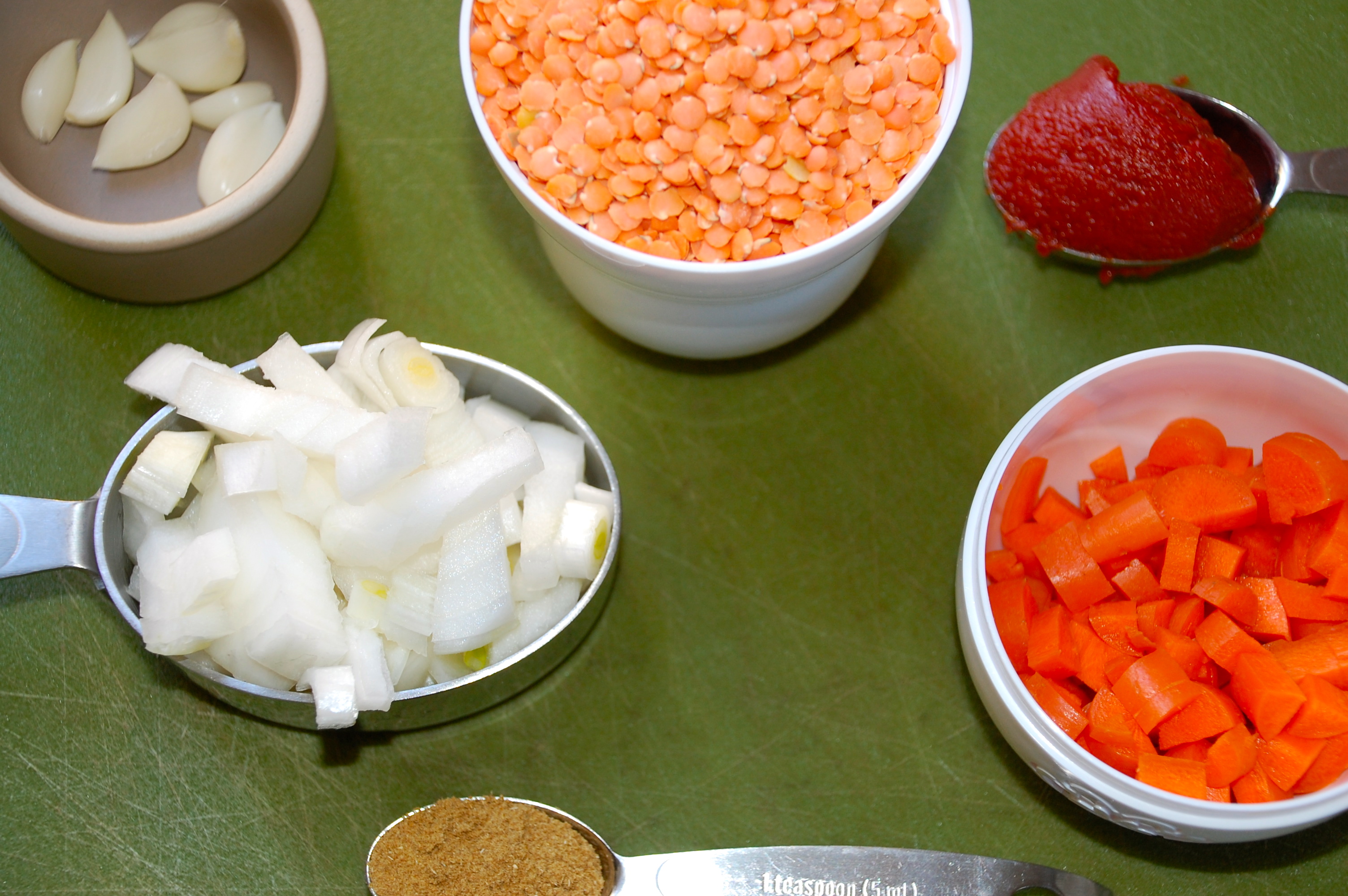
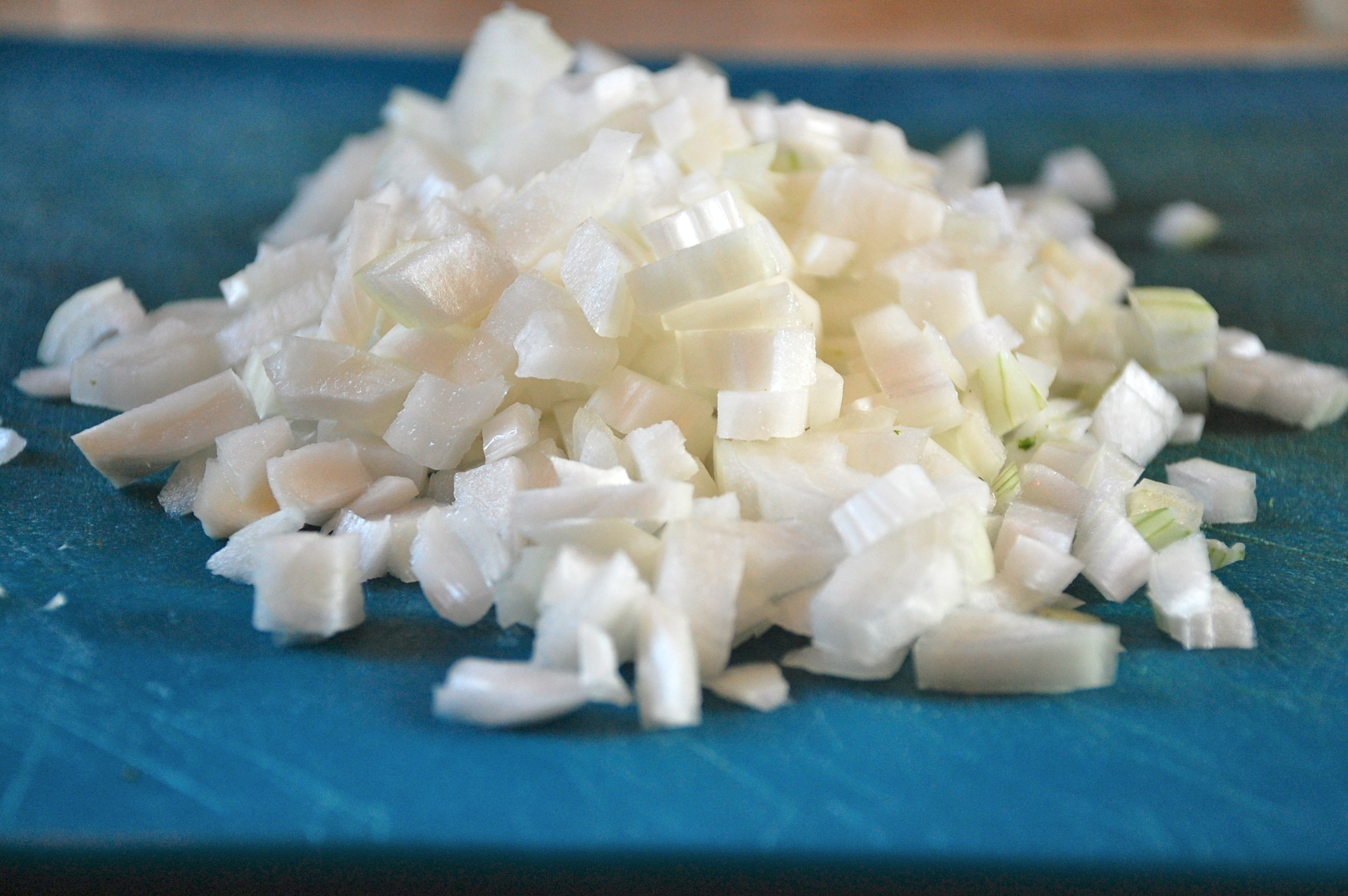
In a large pot, heat 3 tablespoons olive oil over high heat until hot and shimmering. Add 1 large chopped onion and 3-4 minced garlic cloves, and sauté until soft, about 4 minutes.

Stir in 1 tbsp. tomato paste, 1 tsp. ground cumin, 1/4 tsp. each kosher salt and black pepper and a pinch of chili powder or cayenne (yes – even for a family meal. It won’t be spicy, I promise!). Sauté for 2 minutes longer.

Add 1 quart of chicken/vegetable broth and 2 cups water (or 6 cups of water) to onion-spice mixture along with 1 cup of red lentils and 2 diced carrots. Bring to a gentle boil, then partially cover pot and turn heat to medium-low. Simmer until lentils are soft, about 30 minutes. Taste and add salt if necessary.

Cool soup a bit, then purée half the soup using an immersion or regular blender or a food processor. Add pureed soup back to pot. The soup should have some texture.

Reheat soup if necessary, then stir in juice from 1/2 to one lemon (to taste). Garnish with fresh chopped cilantro, a sprinkle of sumac if you have it on hand and a drizzle of olive oil.  You can also dust it lightly with chili powder if desired.

Baked Eggs with Spring Vegetables

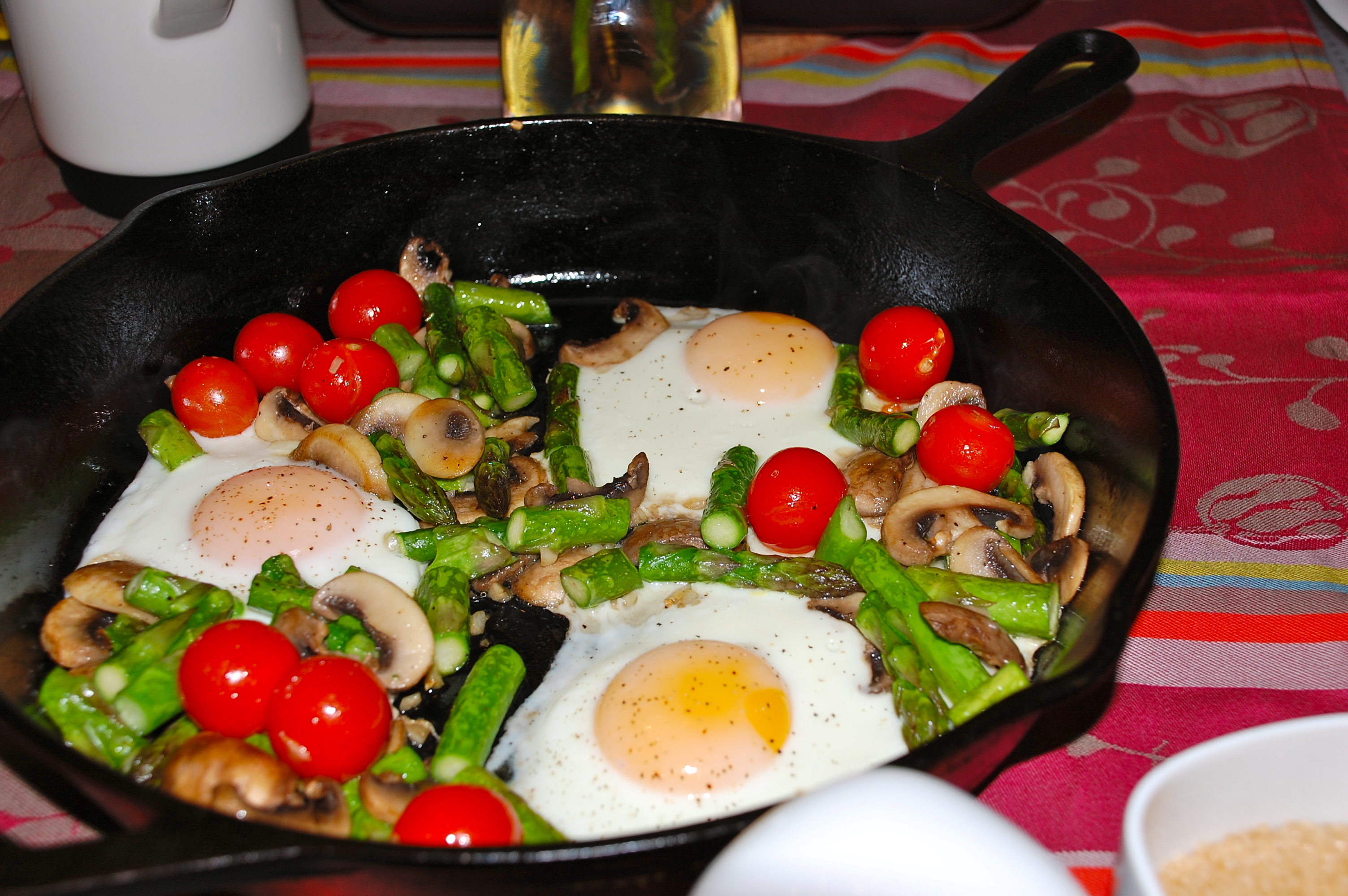
Father’s Day is around the corner, and perhaps like many of you, I’m mulling over special Dad’s Day breakfast menu options. Which got me thinking about the awesome brunch my crew made for me a month ago, in honor of Mother’s Day, featuring Baked Eggs with Vegetables. All you need to pull off this gorgeous and delicious dish is spring/summer produce (asparagus, fava beans, tomatoes and green beans are excellent options) and about 15 minutes of your time. Plus a large skillet (or two, depending on how many you are making). Throw in some good bread or roasted potatoes plus the requisite Bloody Mary/mimosa/fancy cocktail, and you are on your way.

I also happen to appreciate that this dish satisfies anyone who is fussy about their eggs (namely, my children). You have total control over cooking time and thus how “done” the whites and yolks become. It’s fairly easy to end up with perfectly cooked whites and gorgeous runny yolks, which is my personal preference.

Preparation

Inspired by Esperanza Pallana of Pluckandfeather.com

4 servings per 12″ (oven-proof) skillet

Preheat broiler

Rough chop a combination of spring/summer vegetables – green beans, asparagus, mushrooms, tomatoes, summer squash, any mix you have on hand. Finely chop 1-2 cloves of garlic.

Heat olive oil in pan and gently saute garlic. Turn heat to medium-high, add vegetables and cook for 2-4 minutes, until they soften and brighten in color. Clear open a few spaces for eggs and break in the pan (you should have room for 3-4 eggs in a 12-inch skillet). Fry them sunny side up for a few minutes until the bottoms set. Place the pan under the broiler for 1-2 minutes until the whites firmed on top, but the yolk is still runny (or leave them in a bit longer if you prefer hard yolks). Season with salt and pepper and serve.

This is for all the amazing Dad’s out there, including my own!

2011 Organic Produce Shopper’s Guide Released

Environmental Working Group released their 2011 Shopper’s Guide to Pesticides yesterday. Each year, they review pesticide use data and compile two lists : the “Dirty Dozen” features items highest in residues that you should buy organic if possible (apples, celery, strawberries). Those that land on the “Clean 15” turn out to have very low pesticide residues (onions, sweet corn, avocado) and are not as important to go organic. Click here for the complete list.

Integrating information about sustainable food into this blog was always part of my master plan and this news item was the perfect place to start. Be on the lookout for a new page called “Sustainable Ingredients” where over time I will compile  content related to sustainable food. We are living in a time of profound awakening to all food-related matters, and there is no better place to contemplate these issues than in your own kitchen and at the family dinner table. My goal is to share useful information about food labels, how to stretch your food dollar when it comes to organic/sustainable purchases, where to find your nearest farmers’ market, and much more.

Don’t forget to post questions/requests you may have on this topic in the comments section!

Lentil Salad with Spring Vegetables and Goat Cheese

I’m addicted to grain/legume salads these days (see here, plus there will be more to come). Easy to whip up, a great way to use miscellaneous vegetables languishing and neglected in the crisper drawer, perfect for warm summer weather (which will come to SF at some point, right?). What’s not to like? In terms of a family dinner, this falls into the questionable category – dishes that I offer many times before they become a hit.  I’ll ask the girls to try a few bites of the regular version, but likely keep on hand the various ingredients in their separated form in case the “yuck” factor strikes. Aim for color with the vegetable mix and also crunch. Eventually they’ll come around. I hope!

Preparation

Serves 4-6

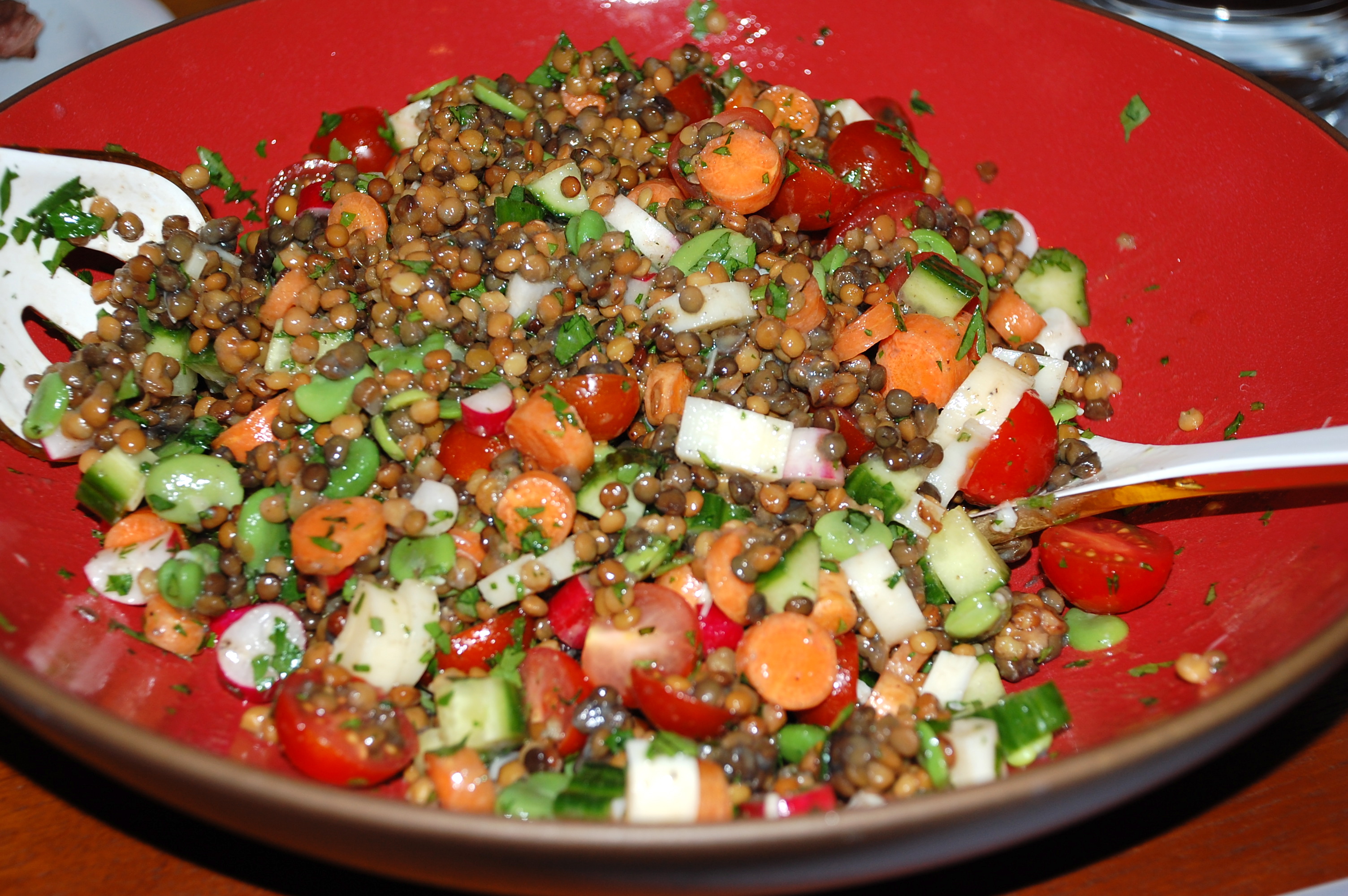
Mix 2-2.5 cups of cooked lentils*** (french or beluga lentils would be best here, or a mix) with 1-2 cups of mixed chopped vegetables. In my version, I used cooked fava beans, sliced cheery tomatoes, chopped hearts of palm for a tangy contrast, radishes, carrots, a few turnips. English or sugar snap peas would also be perfect additions, as would fresh corn, cucumber, bell peppers, etc. Add a combination of chopped herbs you have some on hand: parsley, cilantro, mint and tarragon would be great choices.s Toss with lemon juice or your favorite vinegar, olive oil, salt, and pepper. If desired, add crumbled goat cheese, feta or Mexican cotija cheese.

Dressing please!

Version without cheese ready to serve

*** I tend to rely on Trader Joe’s prepared lentils to make this salad extra easy. If you don’t have access to this product, make your own:

Cooked Lentils

Place about 1 pound of french lentils to a large pot of water. Pierce a small onion with a few whole cloves (optional) and add it to the lentils, along with 3 dried bay leaves, and one large diced carrot. Cover by at least 2 inches of water. Bring to boil, cover and simmer for about 20-30 minutes, until lentil are soft but intact. Add more water if needed. Season with salt and pepper and drain.

Birthday Request: Spaghetti and Meatballs

It all seemed very reasonable. Spaghetti and meatballs for a Tuesday night birthday dinner.  One hour is all it takes to whip up the tastiest version of this dish and yet this hour was not to be had on May 31st when Talia turned 4. Facing a choice between a birthday meltdown over the cancellation of expected plans, or alternatively, serving dinner an hour late to a “hangry” preschooler, I opted for the latter. The risk was well worth it! Meatballs couldn’t be served fast enough. Spaghetti was slithering all over the table, the floor, the shirt, on its way to the mouth. But the entire affair was sufficiently celebratory despite the inauspicious start to the afternoon.

Preparation

Adapted from Chez Panisse Café Cookbook

Serves 6

Cooking time: 1 hour

(The sauce with cooked meatballs freezes nicely – double the recipe and have some on hand for a quick evening meal).

1. Take 1/4 cup of milk and add 1/4 cup of soft bread crumbs (I used half a slice of whole wheat bread and run it quickly through a small food processor) and mix gently. Soak until bread has softened, the drain through fine sieve, squeezing out most of the milk.

2. Sauteé 1 finely diced small yellow onion in olive oil until soft, about 5 minutes, in large pan (which you will also use to cook meatballs). Season with a bit of salt and set aside to cool.

3. In a medium-sized bowl, combine: 1 pound of fresh ground beef, bread crumbs, onion, 3 tbsp grated Parmesan cheese,1 beaten egg, 2 tbsp finely chopped parsley, 1 tsp finely chopped thyme, 1/8 tsp cayenne (the mild heat from the cayenne won’t be an issue for kids but adds great flavor), black pepper to taste, and 1 tsp salt (use a bit more if working with kosher salt).

4. Sauteé 1 thinly sliced red onion in large pan until soft, about 5 minutes.

5. Boil water for spaghetti. Don’t forget to add a generous helping of salt to water once it comes to a boil.

4. Mix ingredients gently but thoroughly until beef reaches an even consistency. Shape mixture into walnut sized balls with wet hands – this is a great kid task! If cooking meatballs immediately, add to pan with onions over medium heat. The uncooked meatballs can also be placed on a plate or baking sheet and refrigerated for a few hours before cooking.

5. Add spaghetti to boiling, salted water. It is should cook in 8-10 minutes, about the time it takes for the meatballs to finish cooking.

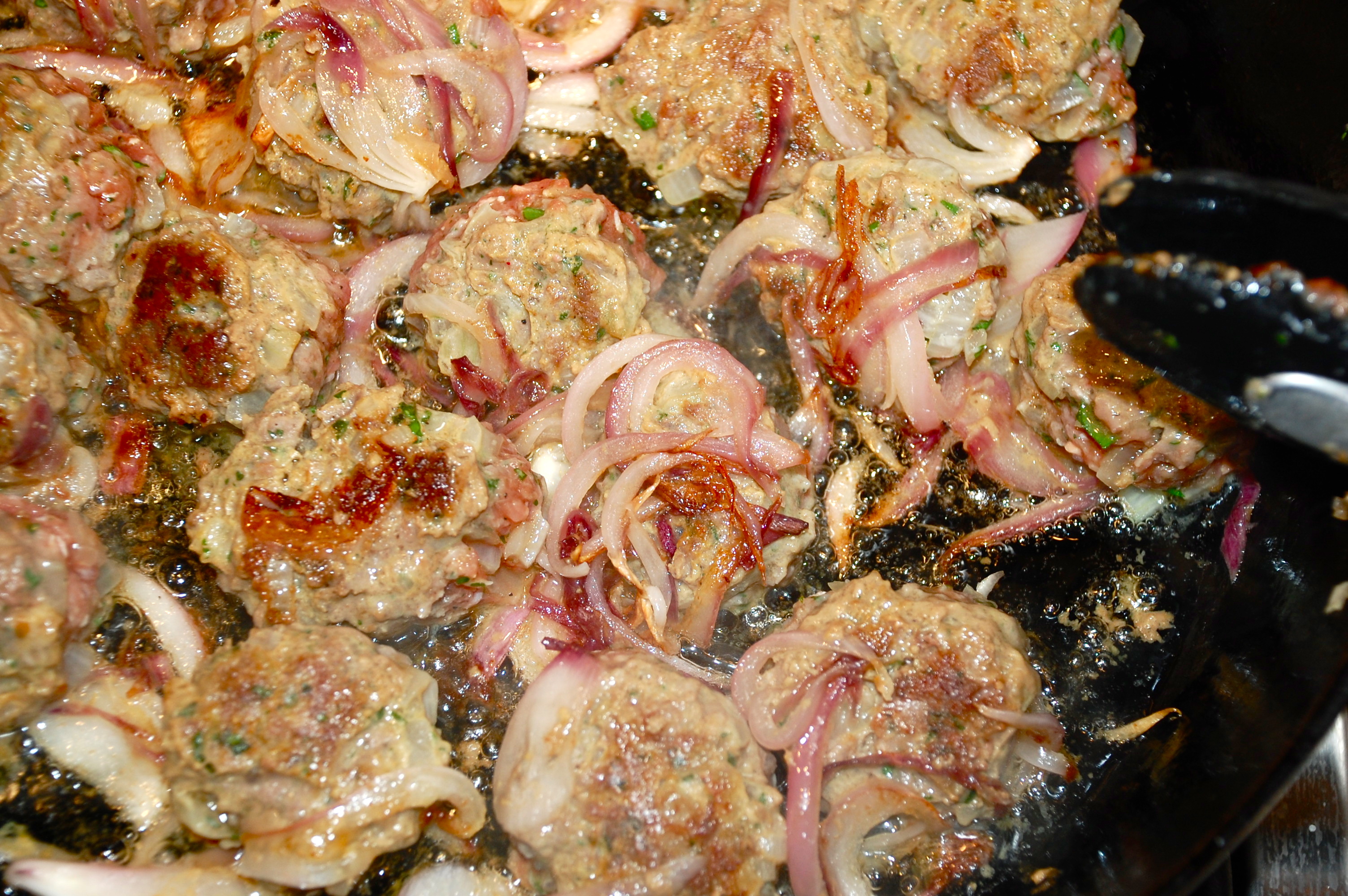
6. Cook meatballs with the red onion, over medium heat, shaking the pan to prevent sticking. Gently turn and toss the onions and meatballs so they brown slightly. Add 2-3 cloves chopped garlic and cook for a few seconds, making sure it doesn’t burn.

7. Add 2 cups simple tomato sauce (look for one in a glass jar with few ingredients – tomatoes, onion, garlic, olive oil, basil perhaps), 1/2 tsp fresh (1 tsp dried) chopped oregano, 2 tbsp finely chopped parsley to sauce. Season with salt and pepper.

8. Simmer gently, uncovered, occasionally stirring the meatballs to coat them with sauce. Check for doneness in about 8-10 minutes.

Serve with grated Parmesan cheese and hot chili flakes if desired (and don’t forget the birthday cake!).


Balsamic Strawberry-Rhubarb Crisp

This evening, I’m meeting with a group of amazing women who work in various realms of the sustainable food movement. We meet for monthly potlucks, and needless to say, there is a serious intimidation factor as this a gathering of highly accomplished cooks.

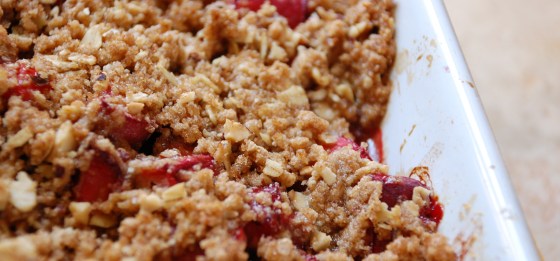
I decided to bring one of my favorite springtime desserts to share – strawberry-rhubarb crisp. I’m generally a sucker for anything strawberry-rhubarb, and last year started experimenting with the addition of balsamic vinegar to this dynamic flavor duo. I was inspired by Bi-Rite Creamery’s fabulous balsamic strawberry ice cream; added balsamic to my strawberry-rhubarb jam (let me know in the comments if you’d like the recipe) and now, its made its way into the crisp. Try it at home – I bet you won’t be able to stop eating it once you start! And of course this is an easy kid favorite – a low sugar dessert with tons of flavor.

Preparation

Crisp Topping (use on a variety of fruit crisps)

Adapted from Vegetarian Cooking for Everyone, Deborah Madison

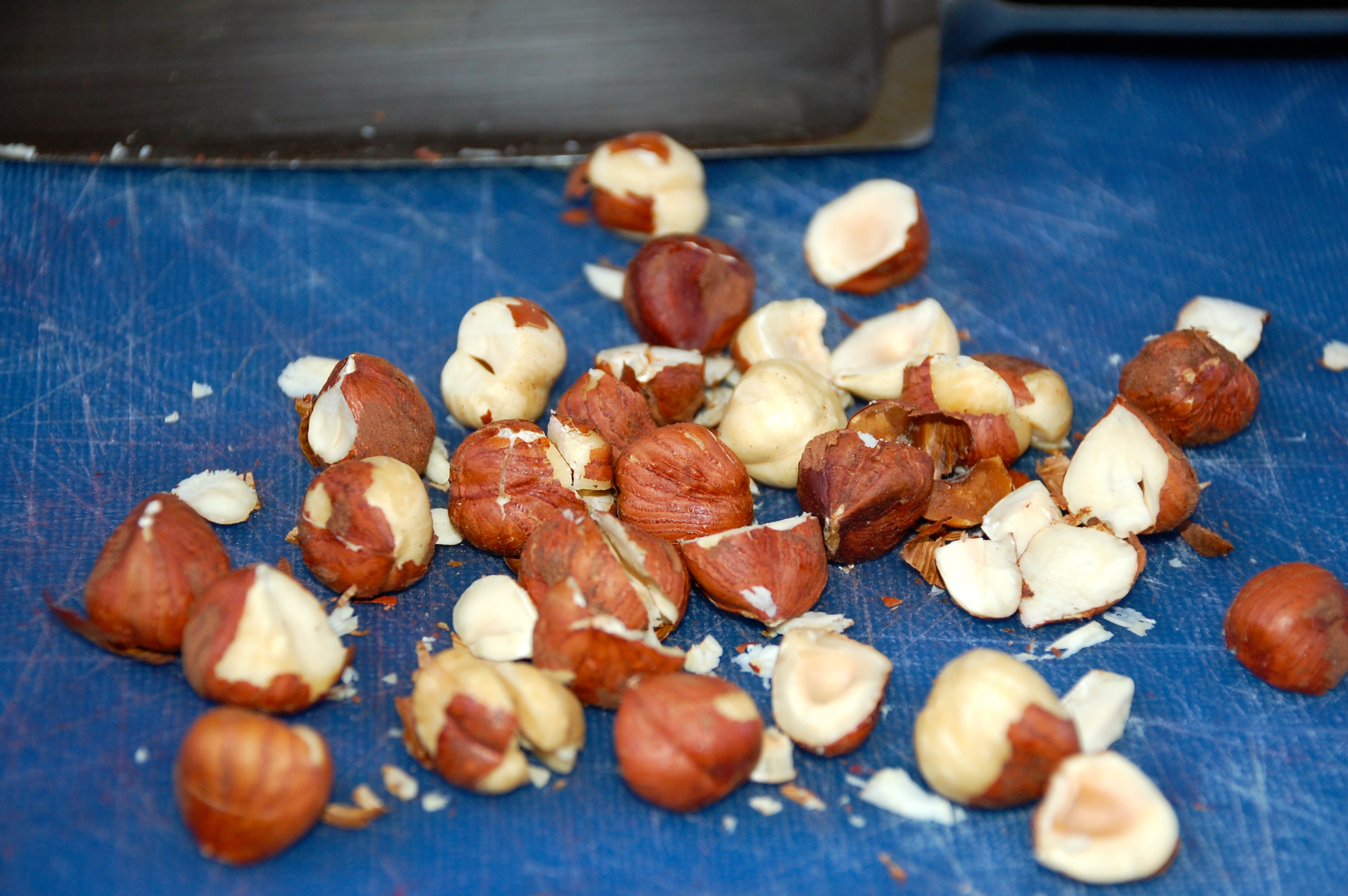
Put 6 tbsp of cold butter, cut into 1/2 inch chunks, into a bowl. Add 3/4 cup brown sugar, 2/3 cup whole wheat flour, 1/4 cup rolled oats, 1/4 cup chopped nuts (or 1/2 cup oats only), 1/4 tsp salt, 1/2 grated nutmeg and 1 teaspoon of cinnamon if you like (I opted out for this crisp.) Using your fingers or the paddle attachment on a stand-up mixer, work the butter with the rest of the ingredients so that each piece is coated and a coarse mixture forms (you shouldn’t see chunks of butter, about 2-3 minutes).

This makes enough for one 8×10 or so crisp. I usually double the recipe and freeze the extras – crisp topping is great to have on hand.

Balsamic Strawberry-Rhubarb Crisp

Makes one 10×13 inch crisp

Preheat oven to 375°

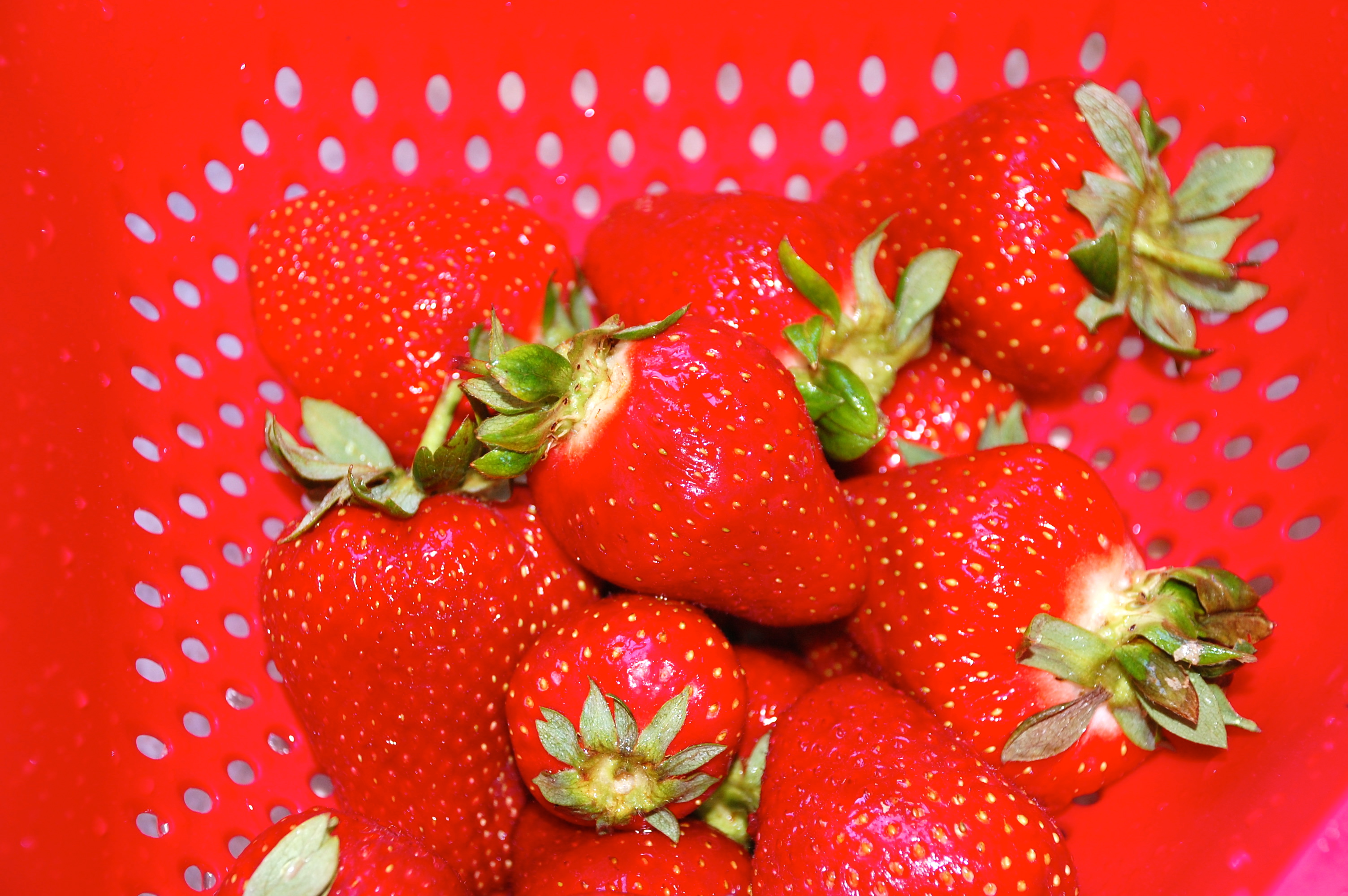
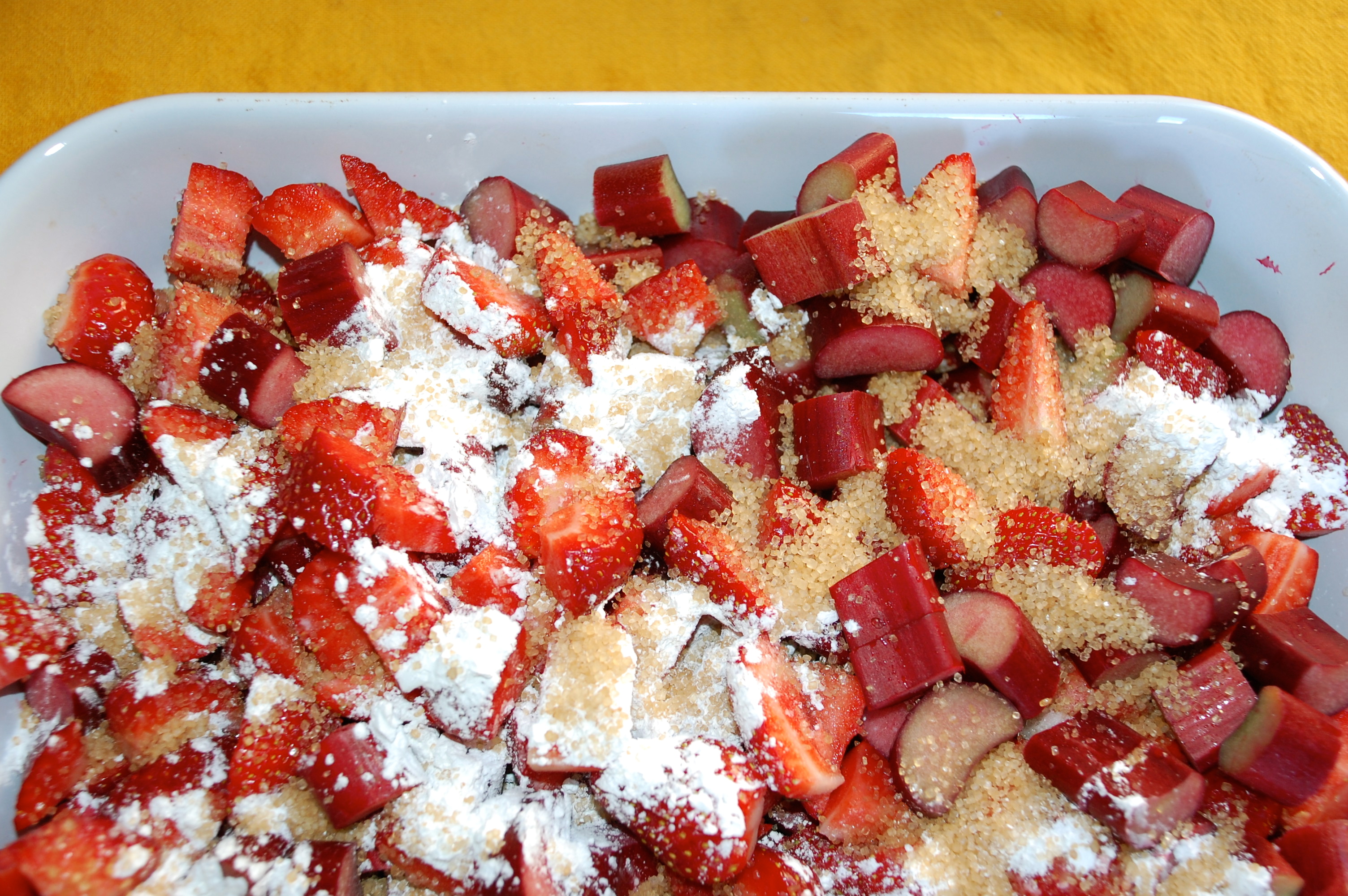
Wash, dry and hull 4-6 pints of strawberries. Chop berries into quarters and add to shallow baking dish. Chop 8-10 rhubarb stalks into 1/2 inch pieces and add to berries. Combine with 3-4 tbsp of cornstarch (to thicken the juices) and 1/3 – 1/2 cup of sugar (depends on sweetness of strawberries. I like to use turbinado/raw sugar). Add in 2 tbsp. balsamic vinegar

Be sure all ingredients are well mixed and distributed throughout the baking dish. Top with crisp topping and bake for about 50 minutes.

I am waiting until the party to taste how it came out but it is extremely tempting to sneak a bite now!

Kale Chips

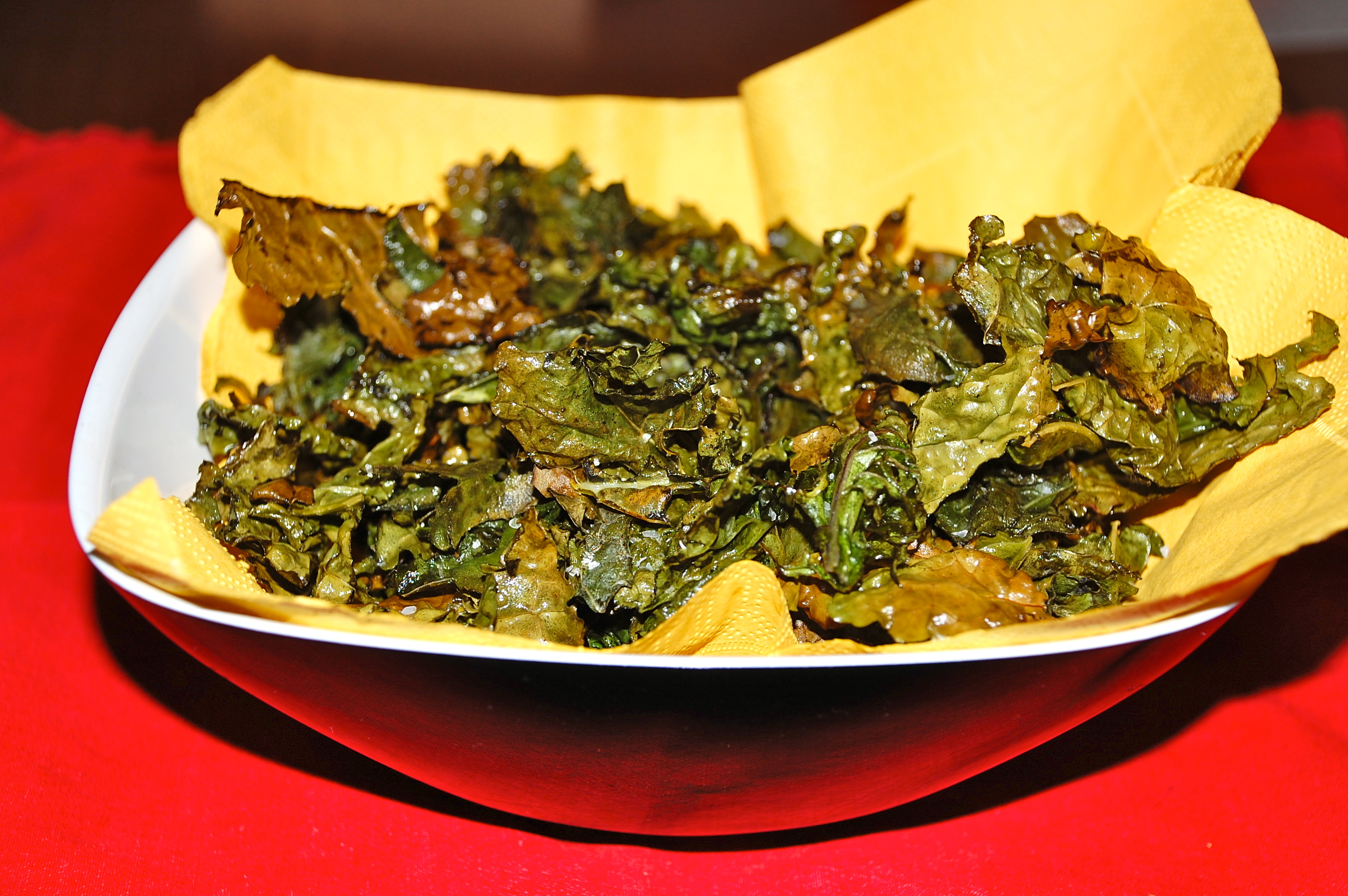
On my quick farmers’ market run yesterday afternoon, I spotted kale chips selling for $5 per small bag. Which got me thinking…. raw kale goes for about $1.50 a bunch this time of year. And while the packaged version was quite a fancy food product, mixed with a vegan cheese and apparently shelf-stable, homemade kale chips sure are a delicious and seriously guilt-free addiction. Provided you don’t eat too many in one sitting, as I have certainly known to do!

Preparation

Serves 4-5
 

Preheat oven to 350°

Remove kale (I prefer to use dino/lacinato kale but others work just as well) leaves from stems: I find the easiest technique for this is to fold the kale in half lengthwise, and cut along the center stem. One cut should remove leaves on both sides.

Rinse well and dry. Tear or cut the kale into chip or bite-sized pieces. Toss well with (extra virgin) olive oil and (sea) salt. Transfer to a lined baking sheet and bake for about 10-15 minutes, taking care not to burn the edges.

Add further seasonings of your choice – chili powder and lime comes to mind. Substituting tamari soy for sea salt is delicious, especially with a sesame oil and sesame seed combo.

Enjoy immediately as a snack or side dish – but remember, pace yourself!

Asparagus Pesto

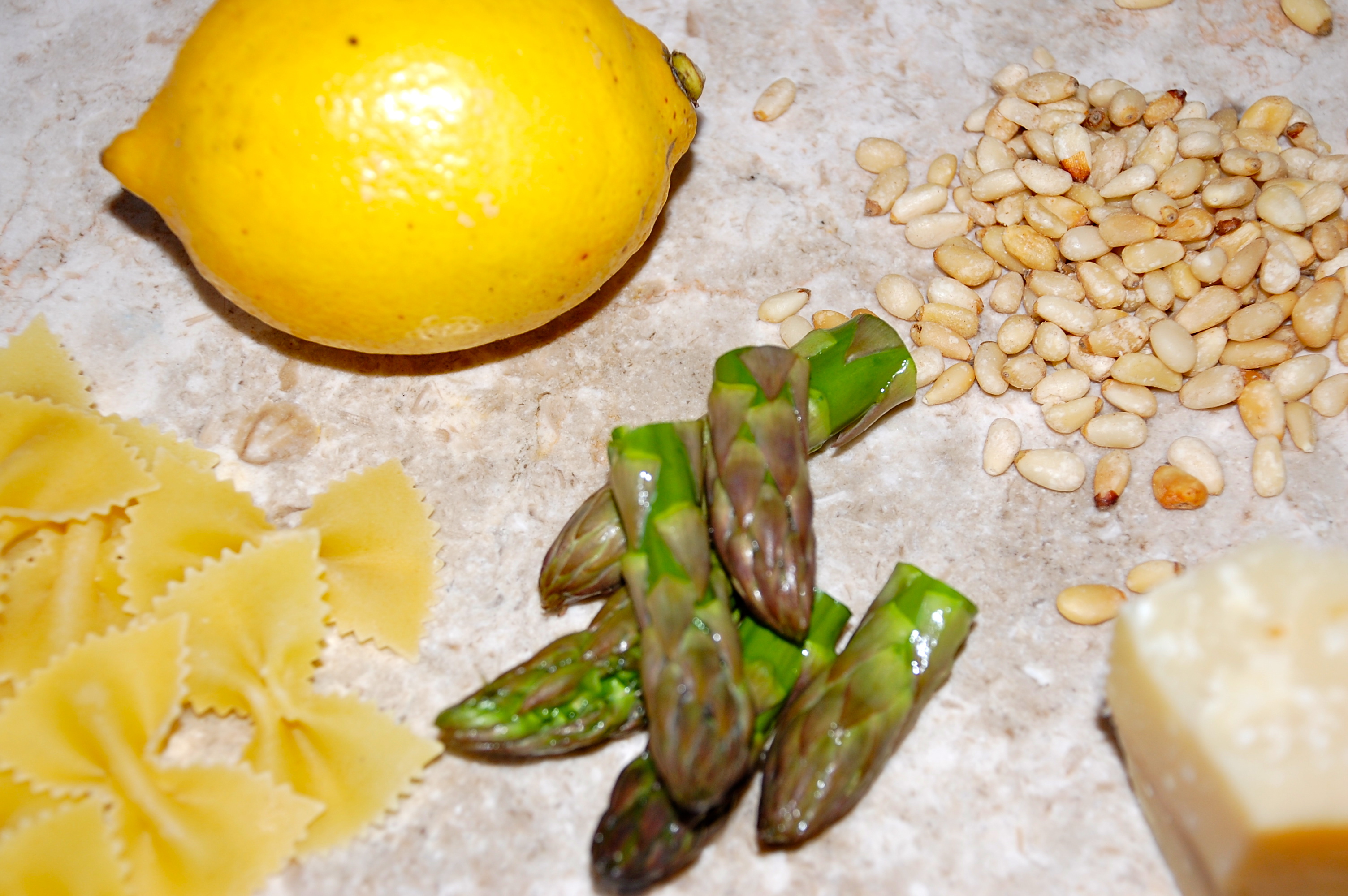
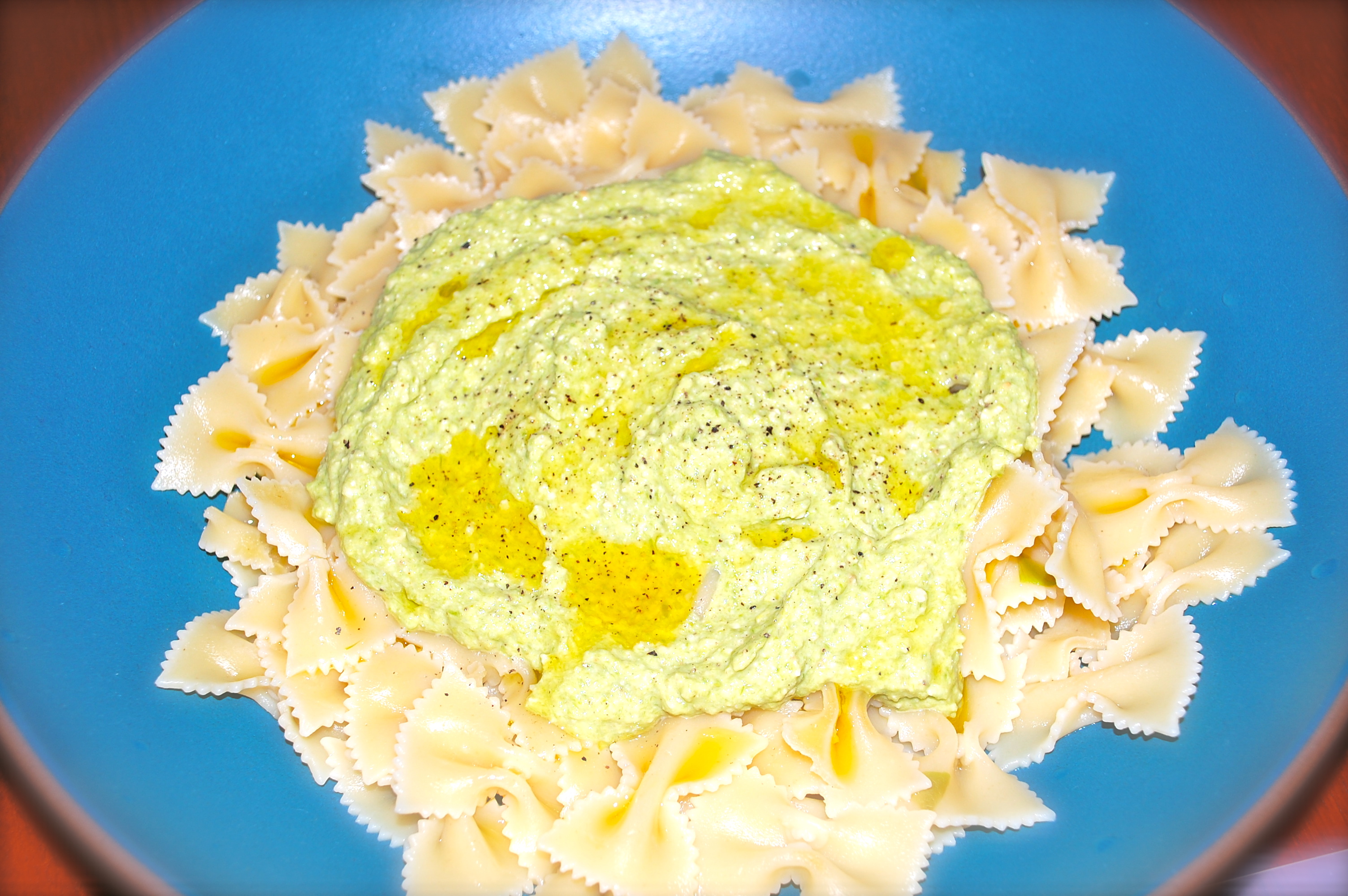
The emergence of spring vegetables at farmers’ markets – fava beans, peas, and most of all, asparagus – brings to me a renewed inspiration for cooking which is much appreciated after the relative monotony of winter fare. As the first asparagus made its way home recently, I was reminded of a dinner a good friend hosted for me and my girls last year around this time. He treated us to an asparagus pesto pasta, developed by Mark Bittman of the New York Times, who happens to be one of my favorite chefs/food activists. At least I saw it as a treat – the kids, definitely not (I recall being grateful, though a bit embarrassed to be asking for, plain noodles).

It is totally delicious, takes less than a half-hour from start to finish, goes great with a glass of crisp white wine and makes for wonderful leftovers. Sadly, it remains unappreciated by the younger set in our household but hopefully we’ll have better luck next time.

Preparation

Time: 20 minutes

Yield: 4 to 6 servings (about 1 1/2 cups).

Salt

1 pound asparagus, trimmed and cut into 2-inch segments

1 clove garlic, or more to taste

1/4 cup pine nuts

1/4 cup olive oil, or more as desired

3/4 cup freshly grated Parmesan cheese

Freshly ground black pepper

Juice of 1/2 lemon, or to taste.

1. Bring a large pot of water to a boil and salt it. Add the asparagus and cook until fully tender but not mushy, 8 to 10 minutes. Drain well, reserving some of the cooking liquid, and let the asparagus cool slightly. (If you have a slotted spoon, use that to take out the asparagus and reserve the cooking water for making the pasta)

2. Transfer the asparagus to a food processor and add the garlic, pine nuts, 2 tablespoons of the oil, Parmesan, a pinch of salt and a couple of tablespoons of the cooking liquid. Process the mixture, stopping to scrape down the sides of the container if necessary, and gradually add the remaining oil and a bit more of the reserved cooking liquid to moisten if necessary. Add the lemon juice and season with salt and pepper to taste, pulse one last time, and serve over pasta, fish or chicken (or cover and refrigerate for up to a day).


Melt-in-your-Mouth Yeasted Waffles

Our family likes waffles but we rarely go through the trouble of making them from scratch. Who really has time to whip egg whites early in the morning, with hungry kids nipping at your heels? So we used to rely primarily on a good whole grain mix or tinker with a pancake recipe to make things work. But this usually results in a dense “healthy” tasting version that, as Ava would say, “is not my favorite.”

Enter the yeasted or raised waffle. A while back, we were served waffles like I’ve never tasted before at our neighbor’s house. When I asked her to disclose the trade secret behind such goodness, she mentioned they were “yeasted”. For some reason, it took me a few years to actually seek out a recipe – and as it turns out, they are a classic, from the Fannie Farmer Cookbook which I happened to have on my shelf as part of my vintage cookbook collection (total volumes at press time: 3). They are super easy – mostly made the night before which means you can whip them up even on busy weekday mornings, are a hit with kids and parents alike, and have the most unbelievably scrumptious texture. Light as air is beyond trite but I can’t think of a more apt description.

Preparation

Adapted from The Fannie Farmer Cookbook, Eleventh Edition

Prep time: 10 minutes

Yields 6 Belgian-style large waffles

Note: the original recipe calls for white flour and 1/2 cup of butter. For a healthier version, I substituted fine whole wheat flour (white whole wheat works great) and made the waffles with 1/4 cup melted butter and 1/4 cup flaxseed oil.

Put 1/2 cup lukewarm water ((100-110° if you are curious what lukewarm means here) ) + 1 package (2 ¼ teaspoons) active dry yeast in a mixing bowl. Let stand for 5 minutes.

Add 2 cups lukewarm milk, 1/4 cup melted butter, 1/4 cup flaxseed oil (or other flavorless vegetable oil), 1 teaspoon salt and 1 teaspoon sugar.

Beat in 2 cups whole wheat flour.

Cover the bowl. Let stand overnight or at least 8 hours (but NOT in the refrigerator).

When it is time to cook the waffles, add 2 beaten eggs and a pinch of baking soda. Beat well. The batter will be VERY thin! Cook with a waffle iron and top with berries, marscapone and maple syrup (as shown) or any other favorite.

School Lunch, New Ideas Please!

On more than one occasion recently, I’ve found myself speaking to a parent about food, mentioning this blog, and immediately getting a request for a post on school lunch.We all can agree that a well-fed child has more patience, more capacity to learn and weather the storms of a school day, and arrives home in a much better mood.  Given the fact that kids often have only 20 minutes to grab a seat, eat, drink socialize and clean up, actually finishing lunch poses a major challenge. It took Ava (and us) until the middle of 2nd grade to figure out our general recipe for success.

Now in my ideal world, children would eat a fresh, healthy, sustainably-sourced and delicious school lunch with their peers on a daily basis. But since that vision, at least in San Francisco, is a long way off, many parents stick to packing a bag lunch. At least some of the time. Which means parents and kids are in constant need of inspiration and ideas, especially as we near the end of the school year and burnout is setting in (at least in our household).

Here is a list of our best lunch strategies, in no particular order. Please add yours to the mix!

1. Hot lunch goes over much better than cold. I can get away with a sandwich (either PB+J or salmon salad, sometimes goat cheese + olive spread) at most once per week. I rely on a kid-sized Thermos to keep the food relatively warm.

2. For hot lunch, its all about leftovers. Having food on hand for lunch is as much a motivator to cook a good dinner as anything.

3. Quick hot lunch components we have time to make in the morning include warmed up beans and a quesadilla (which does get cold but she doesn’t seem to care); tortellini/other pasta and Parmesan cheese; quinoa + garbanzo beans; and similar combos.

4. We used to pack a multi-course spread in small portions. That didn’t go over so well, with lots of food coming home and no longer appetizing after hanging around for hours in a lunch sack. New strategy: pare things down to the very basics: water bottle, hot lunch and fruit or vegetable. This seems to be working.

5. If we get complaints about lunch (to the tune of “I don’t want XYZ anymore!”) it has to be accompanied by a replacement option. Otherwise, the options get limited way too quickly.

6. Cucumber yogurt salad, aka raita or tzatziki, plus bread and butter. Mix a delicious plain yogurt with chopped pieces of cucumber, dill, salt, pepper and maybe one clove of garlic diced into tiny pieces. Throw in a slice of whole grain bread and butter plus fruit.

7. Soup! Yes, this falls into the leftovers category. But worth calling out. Split pea soup, lentil soup, chicken soup, are consistent hits.

8. Sushi. I’ll pick up an avocado roll the day before, make some brown rice as a side, and send it to school. Yes, it’s not exactly homemade. But close enough!

I can’t wait to hear what you would add to this list!