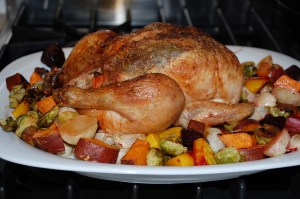
Someone once said that the greatness of a chef should be determined by the taste of their roast chicken. It could’ve been Tom Colicchio of Top Chef, during a most memorable Season Two episode when the awesome Elia seriously impressed all of the judges with her version of said main course.
My relationship with roast chicken started during the early years, with my mother’s version which tends to be moist and tender but lack the accompanying crispness that is the holy grail. I spent most of my 20’s as a social carnivore, happy to partake in all things meat and poultry when someone else makes them (especially if that someone else is an experience restaurant chef). But at some point during my first pregnancy, at a time when I generally started to feel more “adult”, I decided it was high time to tackle the roast chicken challenge. The recipe details escape me, but I distinctly recall it being a fairly low-brow affair, as good friends sat around our coffee table courteously and cautiously sampling the results. Disastrous is a strong word but I would say that this chicken was pretty darn close. I gave up for the next few years.
Then, a good friend introduced me to the ways of Zuni roast chicken. For those of you who haven’t had the pleasure of sampling this delectable entrée at one of SF’s most venerable restaurants, I highly recommend doing so. And if you are nowhere near SF, go ahead and try making it at home – with the panzanella salad if time permits. We gave it a go several times over the course of a year. The results were fabulous – but the lead time is 48+ hours because that is the required salting time. And these days, with two young kids and a two-career household, that level of planning is damn near impossible. So Zuni chicken was a rare treat. But by then my older daughter was hooked on what she started calling “flickin’ chicken.” Her version of finger-lickin’ perhaps, it’s a term that has landed in the family lexicon.
Flickin’ Chicken was requested almost weekly all of a sudden so I had to come up with a plan that didn’t require too much prep time, was flexible in terms of flavor and yielded delicious results of course. Enter that fateful Epicurious search for roast chicken and Thomas Keller. I know most people don’t associate Thomas Keller with simple home cooking but he delivers with Simple Roast Chicken. My slightly adapted version is included here. Feel free to add whatever herbs/stuffing you see fit. The brilliant part is that anything works with the basic technique, be it thyme, sage, lemon and rosemary or thyme/sage with mirepoix inside the cavity. But remember, the simpler the stuffing and herb combo, the better to use the cooked carcass for homemade chicken stock, which I view as a major reward for taking the time to roast my own bird.
The key to a successful execution here is a combo of proper salting (Kosher salt is my favorite for this purpose), trussing the bird, and using high heat. If I do decide to plan ahead and buy the bird in advance of cooking, I always dry it, salt it and throw it in the fridge until about 30 minutes before putting it in the oven. But this is not a must, just an extra (and a good reminder to pre-salt any chicken you make. You’d be surprised how delicious even simple grilled chicken breasts will taste if they are pre-salted for 30 minutes or an hour).
Flickin’ Chicken, adapted from Thomas Keller’s Simple Roast Chicken (2004) on Epicurious.com
Preparation
- One 2- to 3-pound chicken, preferably sustainably raised and/or organic
- Kosher salt and freshly ground black pepper
- Paprika (adds a bit of color)
- Several sprigs of thyme, sage, rosemary; lemon halves; all optional
- 2-3 sticks of carrot and celery, ½ an onion cut into two pieces.
- Kitchen twine
Preheat the oven to 450°F for at least 30 minutes. This is best cooked in a shallow pan – a cast iron skillet works great, as does a stainless steel sauté pan. Go ahead and set the pan in the over for about 15 minutes right before roasting as well.
Dry the chicken very well with paper towels, inside and out. A dry bird means the less it will steam. With roasting, the drier the heat, the better the result
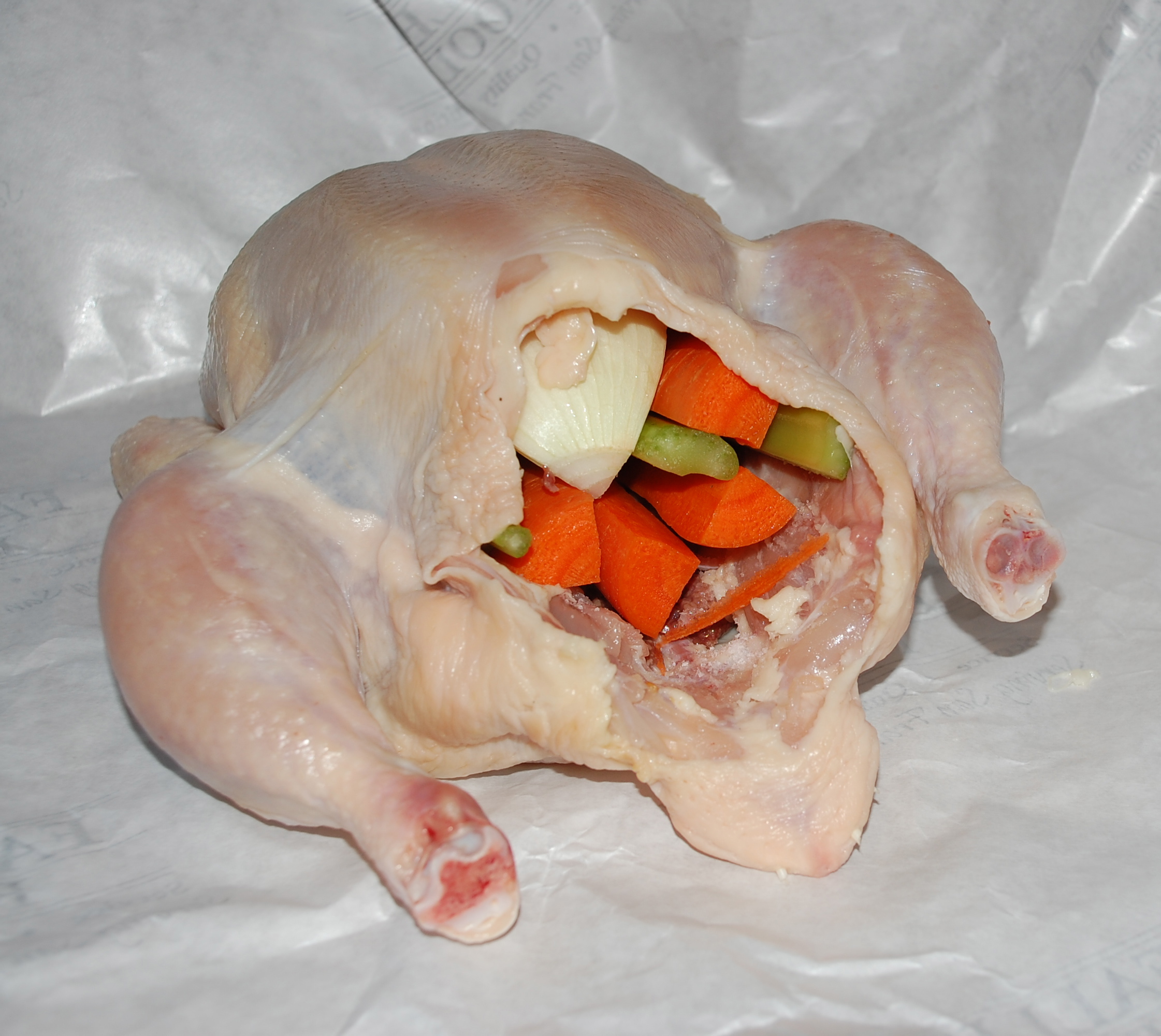
Salt and pepper the cavity, stuff the bird with the mirepoix (the carrot and celery sticks plus onion). If you want to lift the skin over the breast and create a pocket for herbs, this is the next step. But it is optional. Use lemon or orange in the cavity if you like instead of the mirepoix. Then truss the bird (this is a KEY step). Trussing is not difficult, but YouTube always helps. When you truss a bird, the wings and legs stay close to the body; the ends of the drumsticks cover the top of the breast and keep it from drying out. Trussing helps the chicken to cook evenly, and makes for a more attractive result.

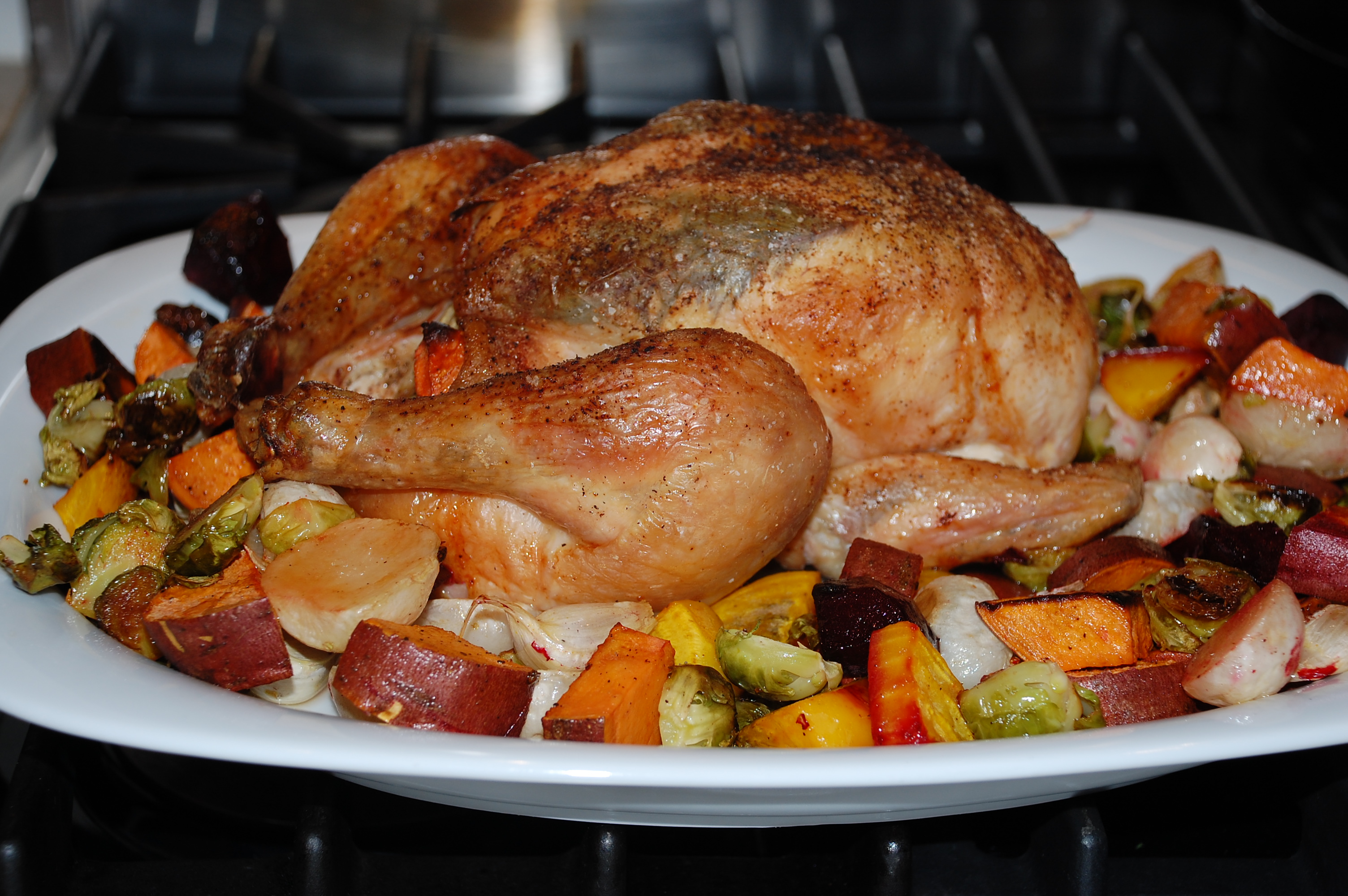
Now, salt the exterior of the chicken—a nice uniform coating will result in a crisp, salty, flavorful skin (a couple of teaspoons of Kosher salt is sufficient). When it’s cooked, you should still be able to make out the salt baked onto the crisp skin. Season to taste with pepper and sprinkle a bit of paprika over the top.

Place the chicken in a sauté pan or roasting pan that has been warming in the over (careful, it will be HOT) then put the chicken in the oven. At this point, you have the pleasure of leaving said bird alone for the 50-60 minutes it will take to roast to perfection. There is no need to baste it or slather it with butter/olive oil, which will just create the unwanted steam. If you are using a larger bird (over 3 lbs ) you may need to add 10-15 more minutes of roasting time. When it is done, remove the bird from the oven and let it rest for 15 minutes or so on a cutting board. Some juices will release – feel free to baste with those. If you like, add some fresh chopped herbs and white wine to the roasting pan to deglaze and make a simple sauce.
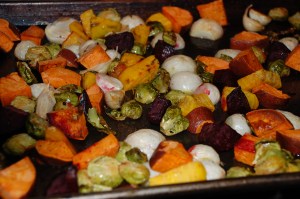
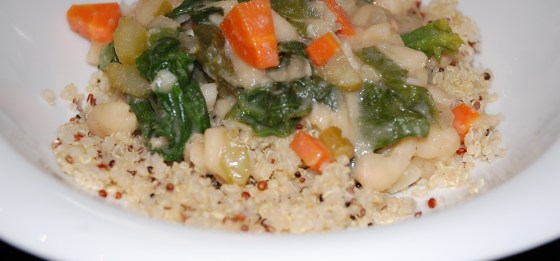
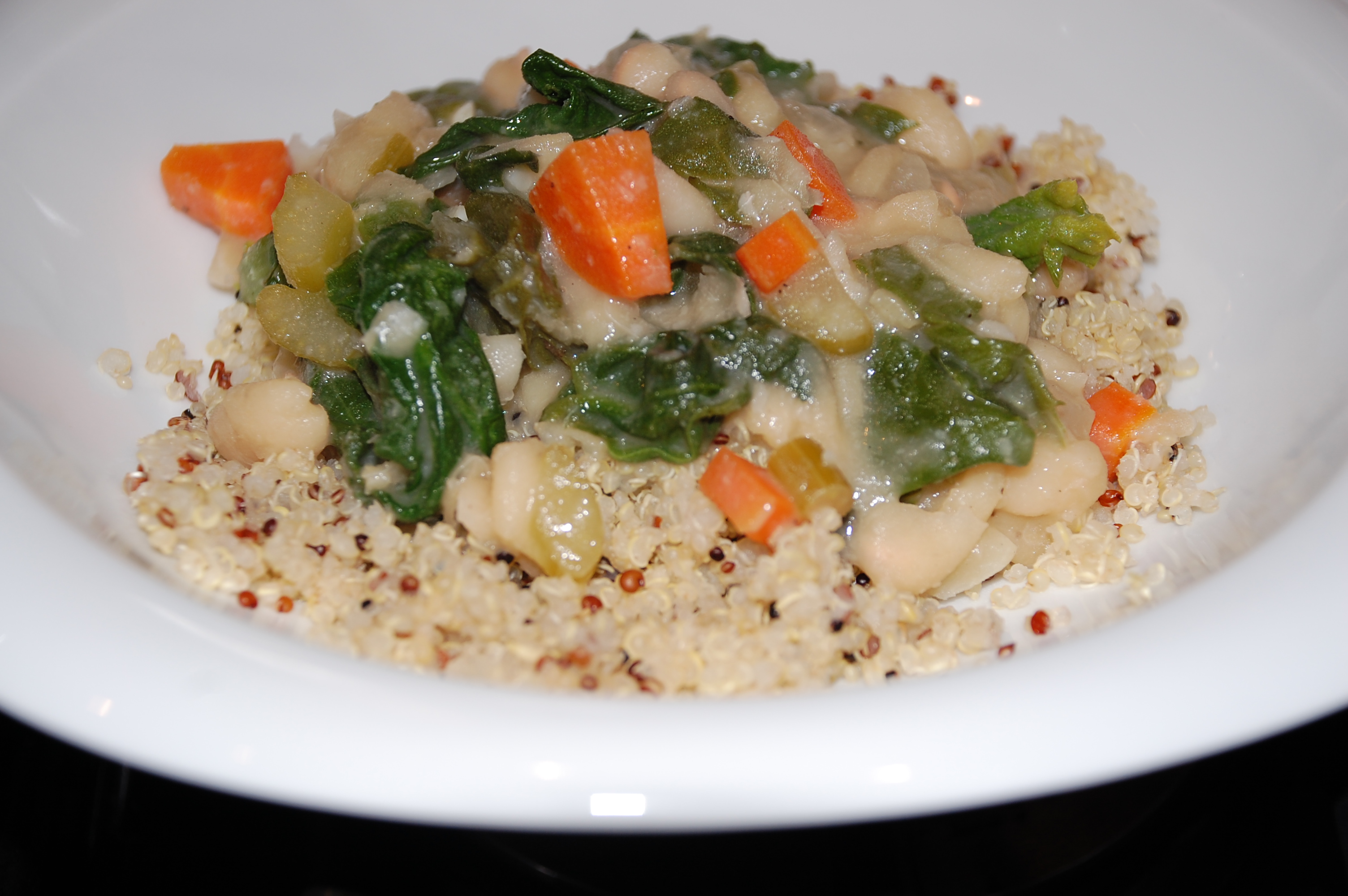
Serve with a side dish of your choice. In our house, Flickin’ Chicken comes with a variety of sides, including mashed potatoes, roasted root vegetables, baked sweet potato fries, rice, quinoa, salad, Brussels sprouts, etc.










 A Happier Meal
