Favorite Lentil Soup

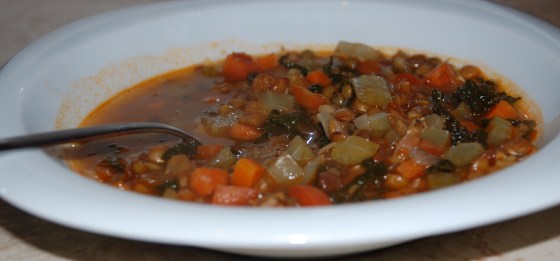
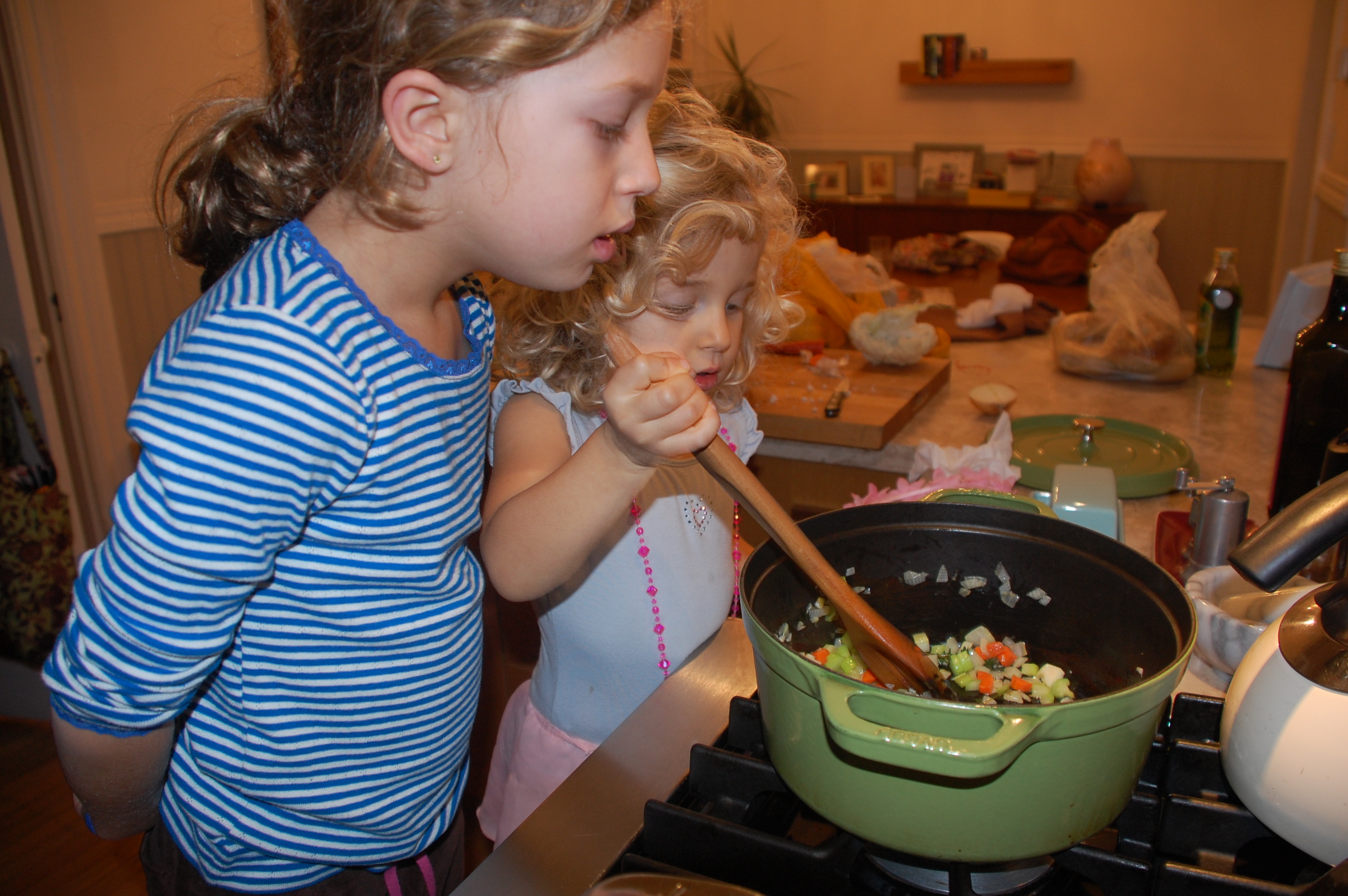
Lentils are an established “superfood” and lucky for us, a general favorite in our household for soups, daal (and salads for the adult crew). I started making this lentil soup, adapted from Deborah Madison’s Vegetarian Cooking for Everyone, when Ava was a toddler. I remember pureeing batches for Talia when she started eating solid foods, and she couldn’t get enough. It was the perfect way to include her into our family dinners without making separate “baby food.” Yes, that kid has an awesome palette and appetite but she’s turned into quite a carnivore as she’s getting older (loves nothing more than salami and cheese for breakfast, perhaps with a small cracker to appease Mom and Dad who are constantly striving for balance). So its exciting for me that she’ll still eat this simple, vegetarian soup with gusto.


Preparation

Serves 4-6 + leftovers

  • Olive oil
  • 1 large onion, diced
  • 3 large garlic cloves, coarsely chopped
  • 2 tsp salt
  • 3 tbsp tomato paste
  • 1/3 cup finely diced celery
  • 1/3 cup finely diced carrot
  • 2 bay leaves
  • 1/2 cup chopped parsley
  • 1 1/2 cup French, brown, or beluga lentils (I prefer a mix)
  • 2-3 handfuls of chopped greens (spinach, kale, chard, etc.)
  • 1 cup of cooked penne or fusilli (optional) or 2 cups of smaller pasta (shells, orecchiette or other)


Heat olive oil in a soup pot, add onion and saute until it softens, about 5 minutes. In the meantime, pound garlic in a mortar with 1 tsp of salt until it become a paste. Add tomato paste to the onions and work until they come together.

Add garlic paste, celery, carrots, bay leaves, and parsley, then cook for about 3 minutes.


Add the lentils, 2 quarts of water, 1 additional teaspoon of salt and bring to a boil. Lower the heat to medium-low and simmer partially covered until the lentils are tender. This takes 30-40 minutes. Toward the end of cooking, add the greens and let them wilt in the soup – spinach should take just a minute or two, chard and kale about 10, to soften. Toss in the pasta if using.

Serve with grated Parmesan cheese – or mix in a couple teaspoons of soft chevre as Ava loves to do. It melts into the soup and adds a lovely dimension of flavor.Crusty bread and gruyere are also a favorite addition.

SLOW COOKER PREPARATION: Follow instructions above for sauteing the vegetables, etc. Once they are cooked in a regular pan on the stove, transfer to the slow cooker, add lentils and 7 cups of water. Cook on high setting for 3-3.5 hours.

NOTE: This soup freezes nicely and tastes better a few hours after it is cooked.


Chicken Soup

One of the rewards of roasting a simple, delicious chicken at home (see this post), besides the great leftover options, is that you can use the carcass to make a quart or two of wonderful broth that will elevate any future soup and stew you make. I can usually squirrel away some broth into the freezer but inevitably (and much to my delight, being the Jewish mom that I am) one of my girls will ask for a dinner of chicken soup as soon as they see it. Lately, we end up doing roast chicken one night, leftover chicken for lunch and possibly dinner the next day, and chicken soup another night the same week. Sounds like poultry overload as I write but it somehow works.

Broth Preparation

  • 1 roast chicken carcass, all meat and skin removed (reserve meat for leftover/soup, toss the skin)
  • 2-3 stalks of celery, cut in large chunks
  • 3 carrots, cut in large chunks
  • 1-2 leeks if desired
  • 1-2 bay leaves
  • a small handful of peppercorns
  • 1-2 tbsp sea salt or kosher salt
  • 5-7 parsley sprigs

Combine the above in a large stockpot and cover with cold water. The chicken should be completely covered by 1-2 inches of water ideally. Bring to a boil then simmer for 1-2 hours, depending on preference. The longer you simmer, the richer the broth. I prefer my broth simple, but feel free to add other herbs and spices as you desire. Refrigerate overnight or for at least 8 hours, which allows the fat to collect at the top. Strain cold broth through a fine mesh strainer into either a new pot if you are making chicken soup right away or into storage containers. Refrigerate or freeze as desired.

Chicken Soup – Serves 4

  • leftover roasted chicken OR 2 grilled chicken breasts (about 1 pound) or equivalent boneless, skinless thighs
  • 2 quarts chicken broth/more or less depending on preference and need
  • 1 carrot, finely chopped
  • 1 celery stock, finely chopped
  • noodles or rice
  • finely chopped parsley if on hand
  • avocado, cilantro, finely chopped onion if desired

I like to grill boneless cuts of chicken quickly on the stovetop to serve as the base for my chicken soup, though you could also poach the chicken, or stew it. Once the chicken is cooked, add the chopped carrots and celery to the chicken broth and bring to a boil. Add your choice of rice or noodles (if using brown rice, cook it separately and add toward the end of preparation, once carrots and celery are desired softness) and simmer for about 20 minutes. Add chicken, cook for another 5 minutes, garnish with chopped parsley and serve. You can’t go wrong with this simple treat but I especially love the Mexican version with chopped avocado, onion, cilantro and rice.

Serve with a good crusty bread for a simple weeknight dinner.

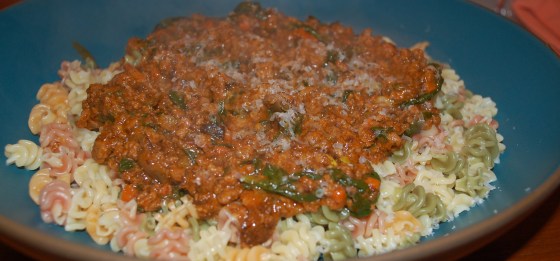
Pasta with Ragú Bolognese

Now that our most welcome February spring has yielded to a round of huge rainstorms, its time to start cooking comfort food again. And no comfort food is more welcome in our home than pasta with ragú Bolognese (also known as noodles with meat sauce for the younger set).  What separates this dish from a more typical (and admittedly quicker) meat sauce is time. It takes at least 1.5 – 2 hours to prepare, due to the slow cooking process which yields an incredibly delicious result. This is not the dish to start at 5PM on a weeknight. However, make a large batch on a weekend and you’ll never regret it. The ragú freezes beautifully, lending itself to easy weeknight cooking when all you have to do is defrost, make some pasta and veggies and indulge. Because the sauce is so versatile, you could also make lasagna with it, serve over polenta and vegetables, or other grains.

Before I delve into specifics, I will admit that there are hundreds, even thousands of variations and approaches to this classic Italian sauce. Feel free to search for more options or amalgamate a few, as I do here. You’ll likely find that the basic ingredients and techniques are similar but the nuances do vary.

One additional note: Though I could not find a written recipe for this Wine Spectator video of Mario Batali making Bolognese sauce, it is really helpful in terms of technique. He breaks down the basics beautifully.

Preparation

Inspired by recipes from the Chez Panisse Café Cookbook, and Mario Batali via the Food Network

Serve 8-10

  • ½-1 cup sliced mushrooms, as available and if preferred OR 1/3 c. dried mushrooms*
  • Extra virgin olive oil
  • 1 medium yellow onion, diced fine
  • 2-4 ounces of diced pancetta
  • 3-4 ribs celery, diced fine
  • 2-3 carrot, diced fine
  • 1 pound ground beef or pork
  • 1 pound ground lamb or veal
  • 2 bay leaves
  • 2 sprigs thyme
  • 4 tbsp tomato paste
  • 1- 1½ cups milk
  • 1 cup white wine
  • kosher salt, black pepper
  • Parmigiano-Reggianno cheese and chopped parsley for grating

If you are using dried mushrooms, soak them in boiling water for 15-20 minutes until soft, drain and reserve the liquid. Chop either soaked or fresh mushrooms finely and set aside.

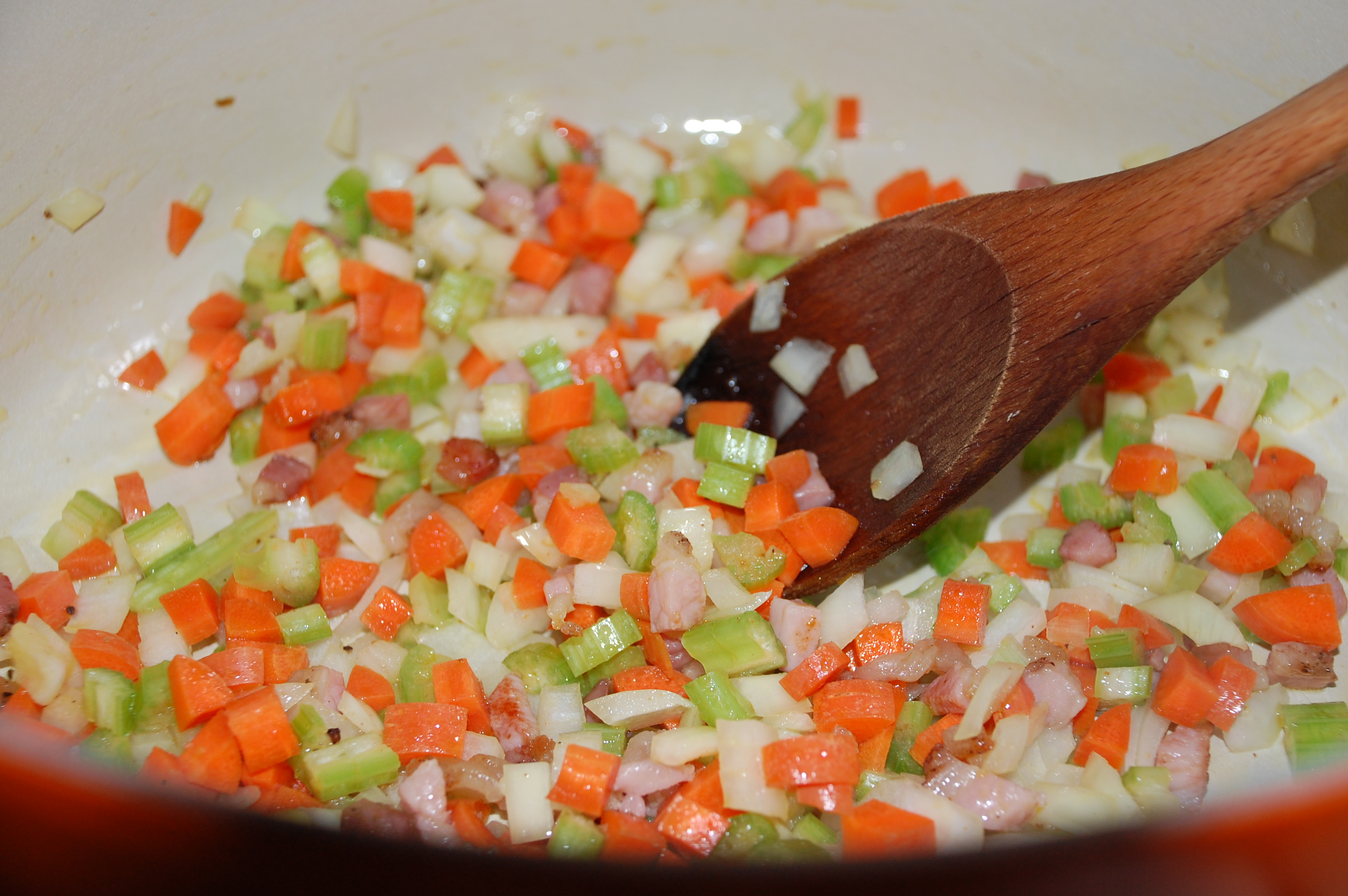
Using a wide, heavy-bottomed pot (this would be a good time to bust out that Le Creuset pot if you have one. We just invested in a large one and I’m in love!), heat a few tablespoons of olive oil and add the diced pancetta. After it releases some fat, add the onion, celery, carrot, garlic and a little salty. Cook until the vegetables are translucent and soft but be sure not to brown them – about 10-15 minutes.


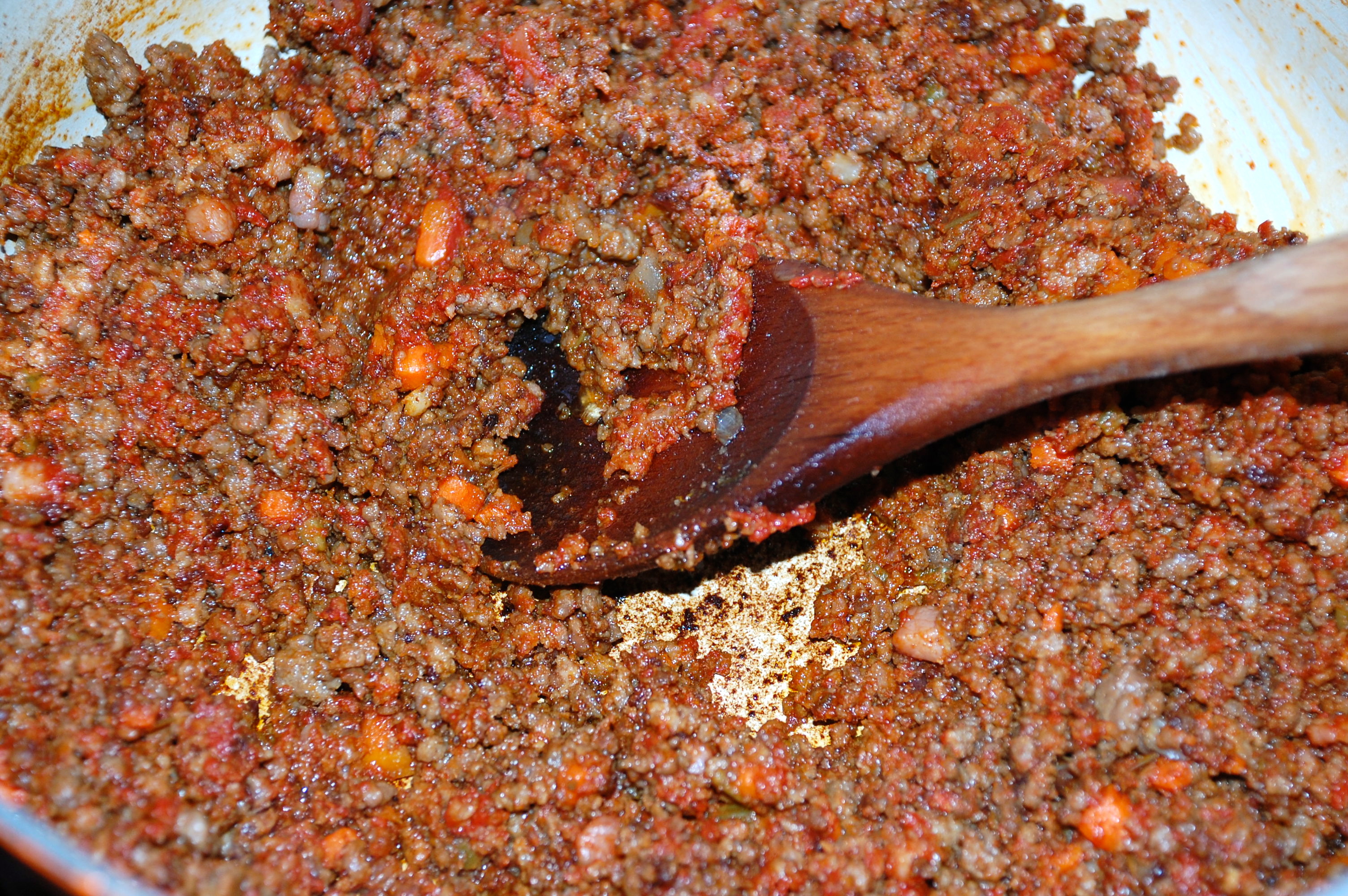
Add the ground meat to the vegetables, season with salt, then cook on a medium to medium-low heat to render the fat and slowly brown the meat. This will take about 45 minutes, with frequent stirring. Move around the sticky bits from the bottom of the pan, then add tomato paste, stir it together with the meat and cook, stirring often, for about 30 minutes. At this stage, the meat and tomato paste will have combined completely in a caramelized mix.

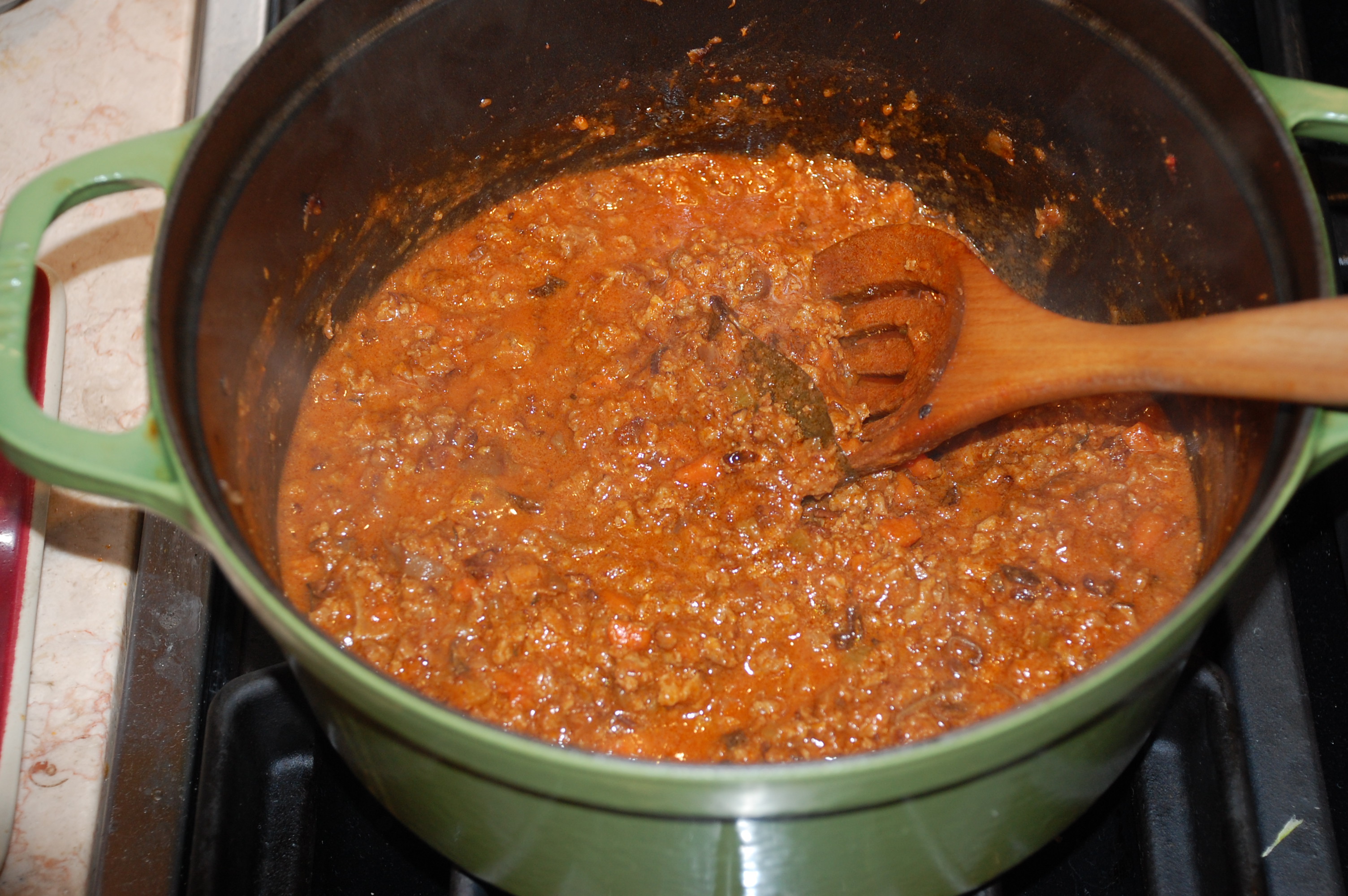
Add the milk and cook until it evaporates completely and leaves the meat silky smooth, about 5 minutes. Then add the wine and reduce on a medium heat until the alcohol is cooked off (you’’ll know when that happens by the smell). After the alcohol has cooked off, add the mushrooms, bay leaves and thyme, and cover the pan. Simmer on medium-low heat for about an hour, then season with salt and pepper to taste.

Serve over pasta of your choice and enjoy!

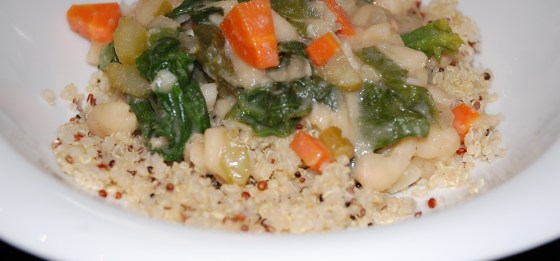
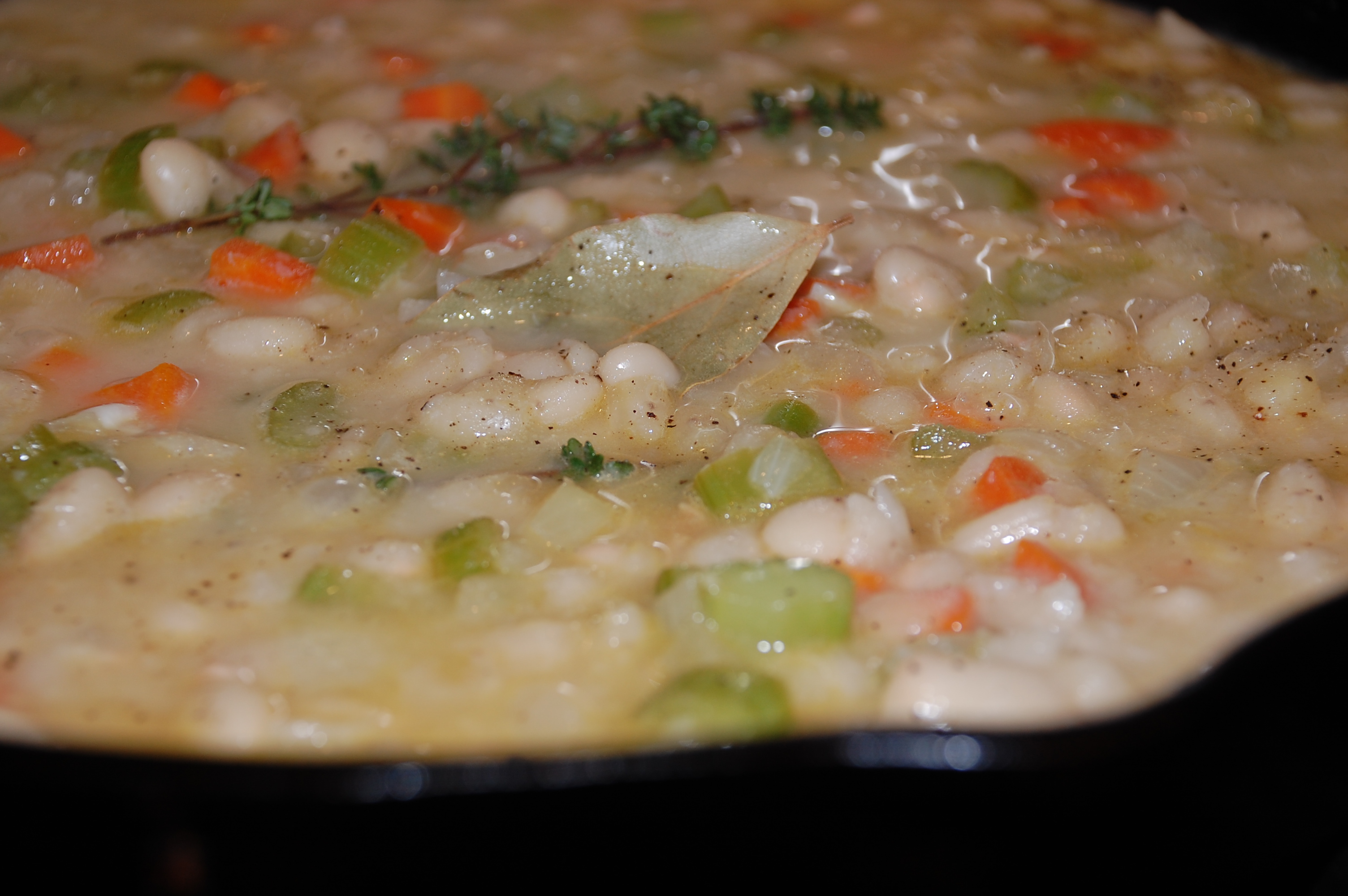
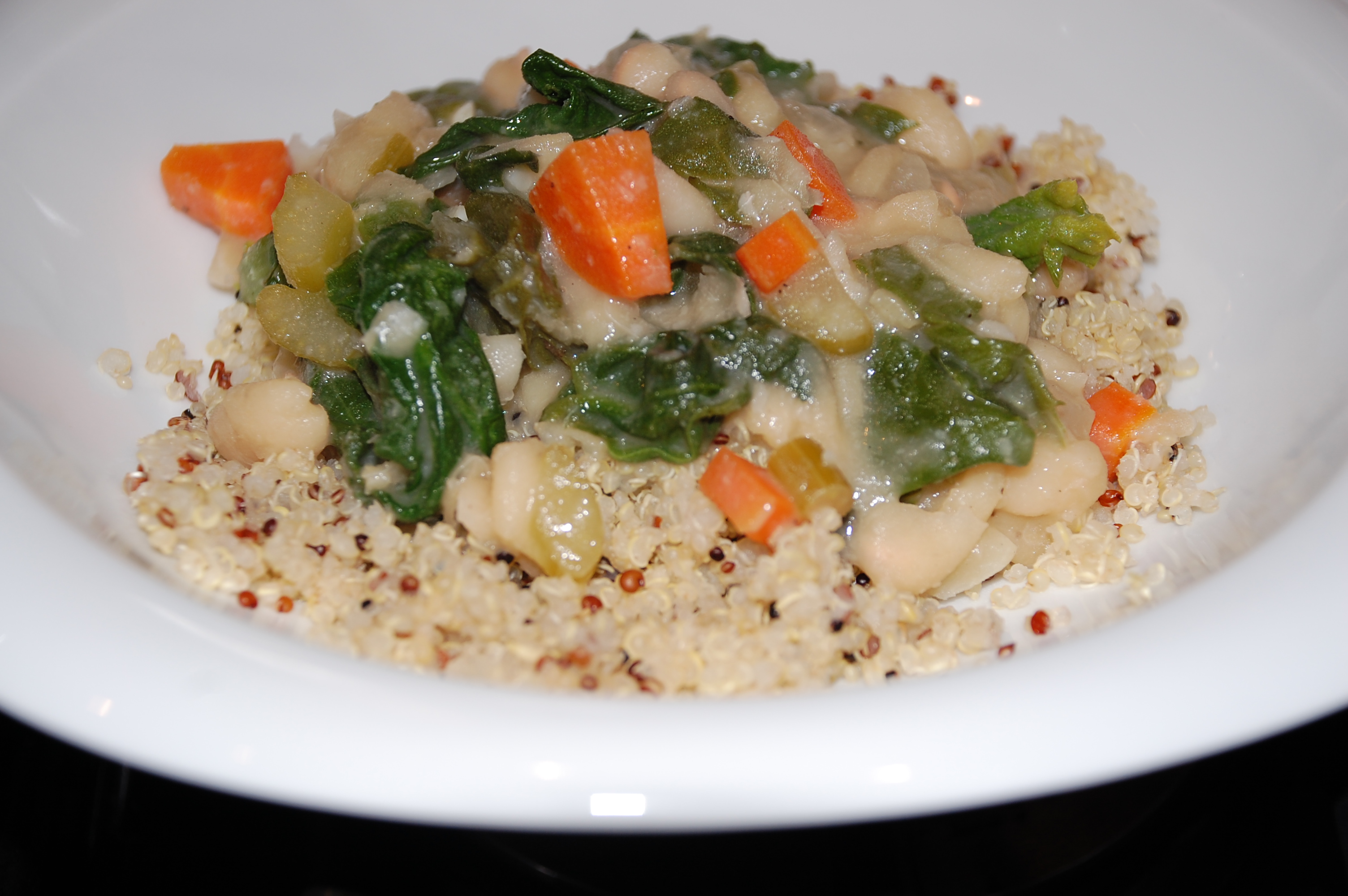
White Bean and Greens Stew (What To Do with Beans, Greens and Grains?)

My kids love pinto and black beans, but have been reluctant to expand their repertoire beyond the Mexican food frame. But in the spirit of introducing foods many times over before giving up, I decided to try out a simple version of white bean stew, featuring kale and served over quinoa that happened to already be cooked and ready to go in the fridge.

Preparation (adapted from Smitten Kitchen)

Here’s the basic approach, and like most of my recipes, feel free to improvise with what you have on hand (suggestions will be offered):

Steam kale (or chard) until leaves are wilted but still bright green. If using spinach for this recipe, skip this step and add it directly to the stew.

Saute chopped carrots, onion, celery (+/- ½ cup of each, shallots OK to substitute for onions) and garlic (2-3 cloves). As an aside, I find that chopping carrots in preparation for cooking is a nice excuse to offer my little ones a carrot stick. Warm up about 2 cups cooked of white beans with some water and a few sprigs of fresh rosemary or thyme – about 15 minutes or so.


Once your flavor base (above) is soft but not brown, add about ¼-½ cup of dry white wine, bring to boil and lower heat to reduce the liquid by about ¾ and the alcohol smell disappears – you’ll be left with a sauce.

At this point, you are ready to add the beans. In this recipe, cannelloni works perfectly and is easy to find canned. Though I would encourage folks to consider making beans in bulk from scratch, given recent emerging concerns about the bisphenol-A that is found in the lining of canned foods.

Add 1-1.5 cups of chicken broth, bring the entire stew to a boil and simmer with the herbs (rosemary/thyme + 1-2 bay leaves) for 15 minutes. Add kale/chard/spinach and cook for 5 more minutes. Season to taste with salt and pepper.

Serve over a cooked grain of your choice (rice, quinoa, farro, barley, etc) and top with a fried egg or as is. Drizzle with olive oil and sherry vinegar for a dash of extra richness and flavor.

If there are leftovers, add more broth or water to turn the stew into a delicious soup!

Preschool kids know what they like: Salt, sugar and fat

Preschool kids know what they like: Salt, sugar and fat.

This recent article published in Science Daily really caught my attention. To me, it drives home the importance of prioritizing home cooking as much as possible and exposing kids from their early months to a variety of flavors outside the salt, sugar, and fat triumvirate. And though it does seem possible to think that if this hasn’t happened by preschool, it will never happen – don’t fret! Plenty of additional research on the impact of school gardens and improved school lunch programs shows that food preferences do change in older children if they are exposed enough to good food.

By Way of Background

It all started with nacho cheese sauce from the local movie theater. Making a homemade version became an obsession of mine during middle school and explained the many uneaten blocks of Velveeta, cheddar and American cheese overtaking my parents’ fridge (much to their dismay). My homemade attempts never lived up to my expectations (much to my dismay) and though my culinary taste has evolved since the mid-1980’s, I do owe my lifelong passion to those cheesy years.

Food is everywhere in my life these days. I am a sustainable food advocate fighting for food that is good, clean, fair and accessible by all. I am the primary “chef” in my family, responsible for planning and preparing most meals, most of the time. Then there is the eating part – living in a food obsessed town like San Francisco, I revel in the privilege of our food culture, where one can find excellent versions of cuisine from almost every country in the world, not to mention the most creative, delicious manifestations of our own contribution to the culinary canon, California cuisine.

As the years pass, I find cooking becomes a deeper and more nuanced passion for me. I cook to calm frayed nerves at the end of a long day; I cook as a creative outlet, never tiring of trying new techniques, flavors, recipes. Cooking is my most treasured way to nourish our young family.

Lately, I’m discovering a deeper connection to cooking by teaching others. Passing on the skills I’ve acquired through observation (thank you PBS cooking shows, and especially Jacques Pépin!) and more than 15 years of practice is a lot of fun. It also reminds how the art of cooking – home cooking in particular – has been lost as our food system industrialized starting in the 1960’s. Our relationship to food preparation is incredibly schizophrenic today. People cook less and less, yet spend hundreds of hours watching competitive cooking shows annually. This blog is my way of inspiring more people to return to their home kitchens, reclaim culinary traditions, and invent new ones.

Inspiration

Before I dig too deep into the specifics of recipes, it seems worth commenting on where I find the inspiration for our family’s meals. In the early days of family life, definitely before I was a mom of two, I spent decent amount of time watching cooking shows. Shows that focused on technique –  most on PBS – were a favorite initially, but as my confidence grew, I turned to shows that highlighted in simple terms how to make good food at home. Ina Garten and Giada deLaurentis were a couple Food Network favorites. I could never really tolerate Rachael Ray though Ava was obsessed around age 3-4 so I was forced to watch 30 Minute Meals for months on end.

Magazines like Sunset are visually appealing and inspiring, as are cookbooks of course, though the limited shelf space in our flat means reigning in the book purchases. And lately more than anything and like many of us who spend more time tethered to electronic devices than we would like, food blogs have become a must (do read the comments before embarking on a recipe – it helps so much with troubleshooting!).

But as the trajectory of my culinary inspiration ran its course, I settled on an approach that I have yet to waver from: let the ingredients in my fridge serve as core inspiration. This started in earnest when my husband and I decided to buy our produce primarily from a CSA (community-supported agriculture) program many years ago. For those not familiar with CSAs, they are a great way to broaden your dietary horizons, access local, organic food at an affordable price and support small family farms in one fell swoop. To find a CSA in your area, check out the Local Harvest site. Give it a go! Many farms allow month-long trial subscriptions for new participants. But I digress…

We signed up for our CSA box through Eatwell Farm, and with the exception of a couple of years when we lived a neighborhood with a weekly farmers’ market, we’ve been members for over a decade. Because the CSA box comes chock full of gorgeous, freshly-harvested fruits and vegetables, along with recipe ideas on how to use said produce, it makes cooking a breeze. All you need to have on hand is a stocked pantry (as basic or elaborate as you like), some fresh protein to pick 1-2 times per week (poultry, tofu/tempeh, grassfed beef, fish, dairy, often you can use these interchangeably) and an hour to cook. The rest is up to you! Let the produce be your guide – and it never hurts to have a great vegetarian cookbook on hand for those moments when you can’t think of another interesting chard recipe or have no idea what to do with that lovely kohlrabi that just showed up (as happened to us yesterday). Deborah Madison’s Vegetarian Cooking for Everyone has served as my cooking bible since my early grad school days, and I do turn to Chez Panisse Vegetables occasionally for more sophisticated fare. Nowaways, off course, you can rely on myriad Internet sources to serve this purposes. But I do love the look of a well-loved and well-used cookbook.

Stone Soup

The classic folk tale “Stone Soup” was a favorite of my daughter’s when she was a preschooler. We read that book endlessly, yet neither of us grew tired of the story, with its wise messages of cooperation and community through the lens of sharing food.

So imagine how excited Ava was when her after-school “Cooking in the Garden” teachers decided to make “stone soup” one cool Monday afternoon in October! At pick up time, she couldn’t stop raving about how delicious the soup was, how healthy, how she loved it DESPITE the (judicious) addition of canned tomatoes (not a favorite), and how thrilling it was to share some with me. “Stone soup” was the topic of conversation all evening long and could not be laid to rest until I promised to make some at home. So we did. As luck would have it, the soup fit all of our respective criteria for a successful dinner: the girls loved how “good” it tasted and emphasized that making it was “fun!” The soup became a veritable rainbow of vegetables – that holy grail of healthy kid cooking. Add a side of bread and cheese, and you’ve got yourself an easy weekday meal.

“Stone Soup”  (Adapted from “Cooking in the Garden” after-school class, Grattan Elementary School)

Preparation

Dice carrots, celery and onion and saute this mirepoix with olive oil in a soup pot until soft, about 10 minutes.

Rough chop a variety of vegetables* and add to the base.

Add a bit more olive oil for flavor, a bay leaf if you desire, about 1-2 teaspoons of kosher salt, a dash of pepper and enough water or broth to cover all of the vegetables plus an inch. Bring to a boil then reduce to a rolling simmer and cook for 15-20 minutes, until the vegetables are soft. Add ½ cup of chopped, canned tomatoes (or more/less to taste) and any quick-cooking vegetables like spinach and mushrooms toward the end of cooking. Enjoy!


* This is the perfect soup to empty out the miscellaneous vegetables floating around in your crisper drawer or pantry. All you need is 1-2 of each, with the emphasis on variety and color. Suggested options include but are definitely not limited too: purple/red/white new potatoes; sweet potatoes; rutabagas; parsnips; kale; yellow/red/orange beets; corn; spinach;

(I originally posted this on my friend Simran’s excellent blog, A Little Yumminess)

Favorite Roast Chicken (aka Flickin’ Chicken)

Someone once said that the greatness of a chef should be determined by the taste of their roast chicken. It could’ve been Tom Colicchio of Top Chef, during a most memorable Season Two episode when the awesome Elia seriously impressed all of the judges with her version of said main course.

My relationship with roast chicken started during the early years, with my mother’s version which tends to be moist and tender but lack the accompanying crispness that is the holy grail. I spent most of my 20’s as a social carnivore, happy to partake in all things meat and poultry when someone else makes them (especially if that someone else is an experience restaurant chef). But at some point during my first pregnancy, at a time when I generally started to feel more “adult”, I decided it was high time to tackle the roast chicken challenge. The recipe details escape me, but I distinctly recall it being a fairly low-brow affair, as good friends sat around our coffee table courteously and cautiously sampling the results. Disastrous is a strong word but I would say that this chicken was pretty darn close. I gave up for the next few years.

Then, a good friend introduced me to the ways of Zuni roast chicken. For those of you who haven’t had the pleasure of sampling this delectable entrée at one of SF’s most venerable restaurants, I highly recommend doing so. And if you are nowhere near SF, go ahead and try making it at home – with the panzanella salad if time permits. We gave it a go several times over the course of a year. The results were fabulous – but the lead time is 48+ hours because that is the required salting time. And these days, with two young kids and a two-career household, that level of planning is damn near impossible. So Zuni chicken was a rare treat. But by then my older daughter was hooked on what she started calling “flickin’ chicken.” Her version of finger-lickin’ perhaps, it’s a term that has landed in the family lexicon.

Flickin’ Chicken was requested almost weekly all of a sudden so I had to come up with a plan that didn’t require too much prep time, was flexible in terms of flavor and yielded delicious results of course. Enter that fateful Epicurious search for roast chicken and Thomas Keller. I know most people don’t associate Thomas Keller with simple home cooking but he delivers with Simple Roast Chicken. My slightly adapted version is included here. Feel free to add whatever herbs/stuffing you see fit. The brilliant part is that anything works with the basic technique, be it thyme, sage, lemon and rosemary or thyme/sage with mirepoix inside the cavity. But remember, the simpler the stuffing and herb combo, the better to use the cooked carcass for homemade chicken stock, which I view as a major reward for taking the time to roast my own bird.

The key to a successful execution here is a combo of proper salting (Kosher salt is my favorite for this purpose), trussing the bird, and using high heat. If I do decide to plan ahead and buy the bird in advance of cooking, I always dry it, salt it and throw it in the fridge until about 30 minutes before putting it in the oven. But this is not a must, just an extra (and a good reminder to pre-salt any chicken you make. You’d be surprised how delicious even simple grilled chicken breasts will taste if they are pre-salted for 30 minutes or an hour).

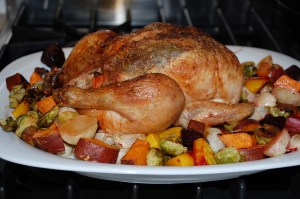
Flickin’ Chicken, adapted from Thomas Keller’s Simple Roast Chicken (2004) on Epicurious.com

Preparation

  • One 2- to 3-pound chicken, preferably sustainably raised and/or organic
  • Kosher salt and freshly ground black pepper
  • Paprika (adds a bit of color)
  • Several sprigs of thyme, sage, rosemary; lemon halves; all optional
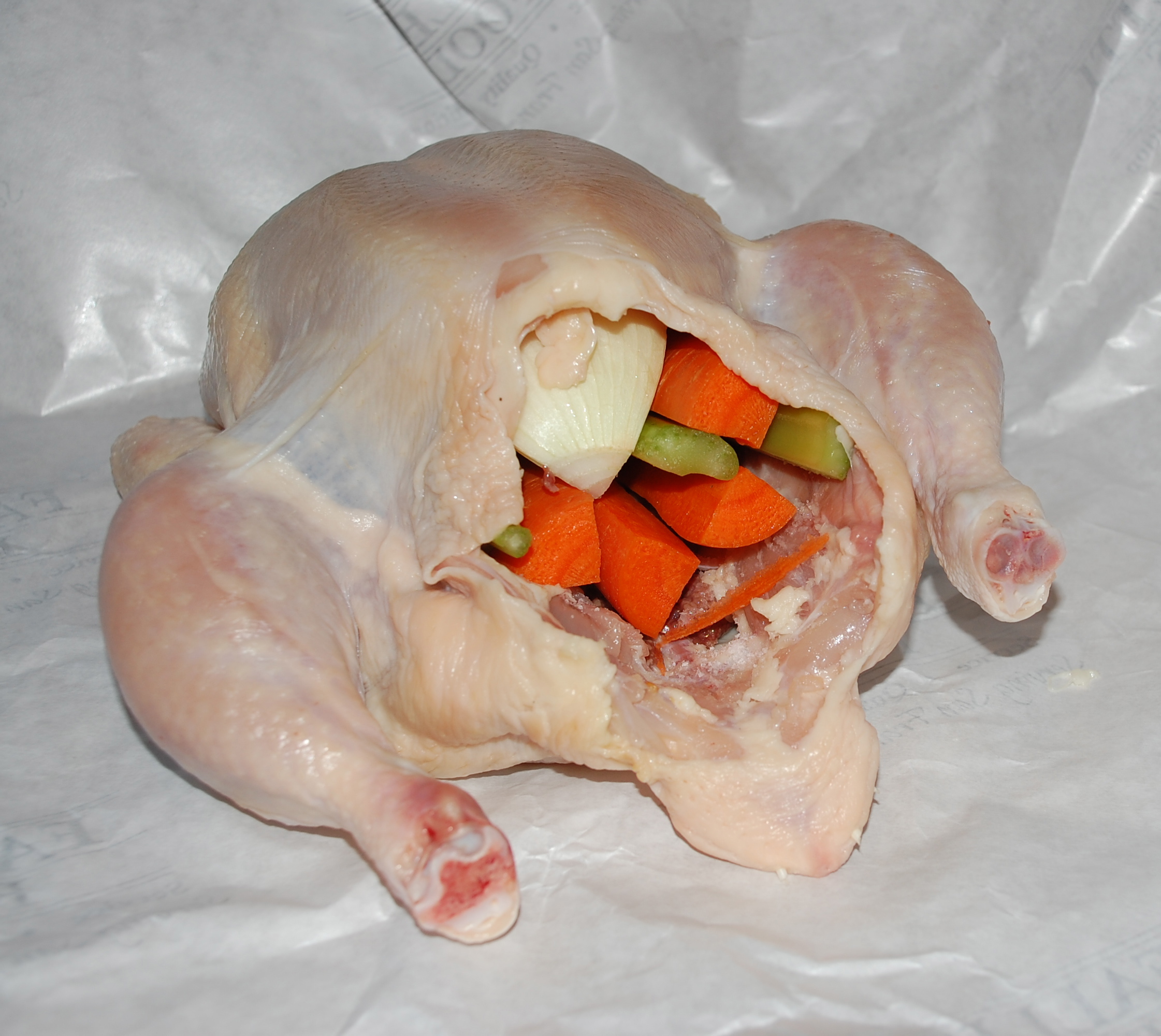
  • 2-3 sticks of carrot and celery, ½ an onion cut into two pieces.
  • Kitchen twine

Preheat the oven to 450°F for at least 30 minutes. This is best cooked in a shallow pan – a cast iron skillet works great, as does a stainless steel sauté pan. Go ahead and set the pan in the over for about 15 minutes right before roasting as well.

Dry the chicken very well with paper towels, inside and out. A dry bird means the less it will steam. With roasting, the drier the heat, the better the result

Salt and pepper the cavity, stuff the bird with the mirepoix (the carrot and celery sticks plus onion). If you want to lift the skin over the breast and create a pocket for herbs, this is the next step. But it is optional. Use lemon or orange in the cavity if you like instead of the mirepoix. Then truss the bird (this is a KEY step). Trussing is not difficult, but YouTube always helps. When you truss a bird, the wings and legs stay close to the body; the ends of the drumsticks cover the top of the breast and keep it from drying out. Trussing helps the chicken to cook evenly, and makes for a more attractive result.


Now, salt the exterior of the chicken—a nice uniform coating will result in a crisp, salty, flavorful skin (a couple of teaspoons of Kosher salt is sufficient). When it’s cooked, you should still be able to make out the salt baked onto the crisp skin. Season to taste with pepper and sprinkle a bit of paprika over the top.

Place the chicken in a sauté pan or roasting pan that has been warming in the over (careful, it will be HOT) then put the chicken in the oven. At this point, you have the pleasure of leaving said bird alone for the 50-60 minutes it will take to roast to perfection. There is no need to baste it or slather it with butter/olive oil, which will just create the unwanted steam. If you are using a larger bird (over 3 lbs ) you may need to add 10-15 more minutes of roasting time. When it is done, remove the bird from the oven and let it rest for 15 minutes or so on a cutting board. Some juices will release – feel free to baste with those. If you like, add some fresh chopped herbs and white wine to the roasting pan to deglaze and make a simple sauce.
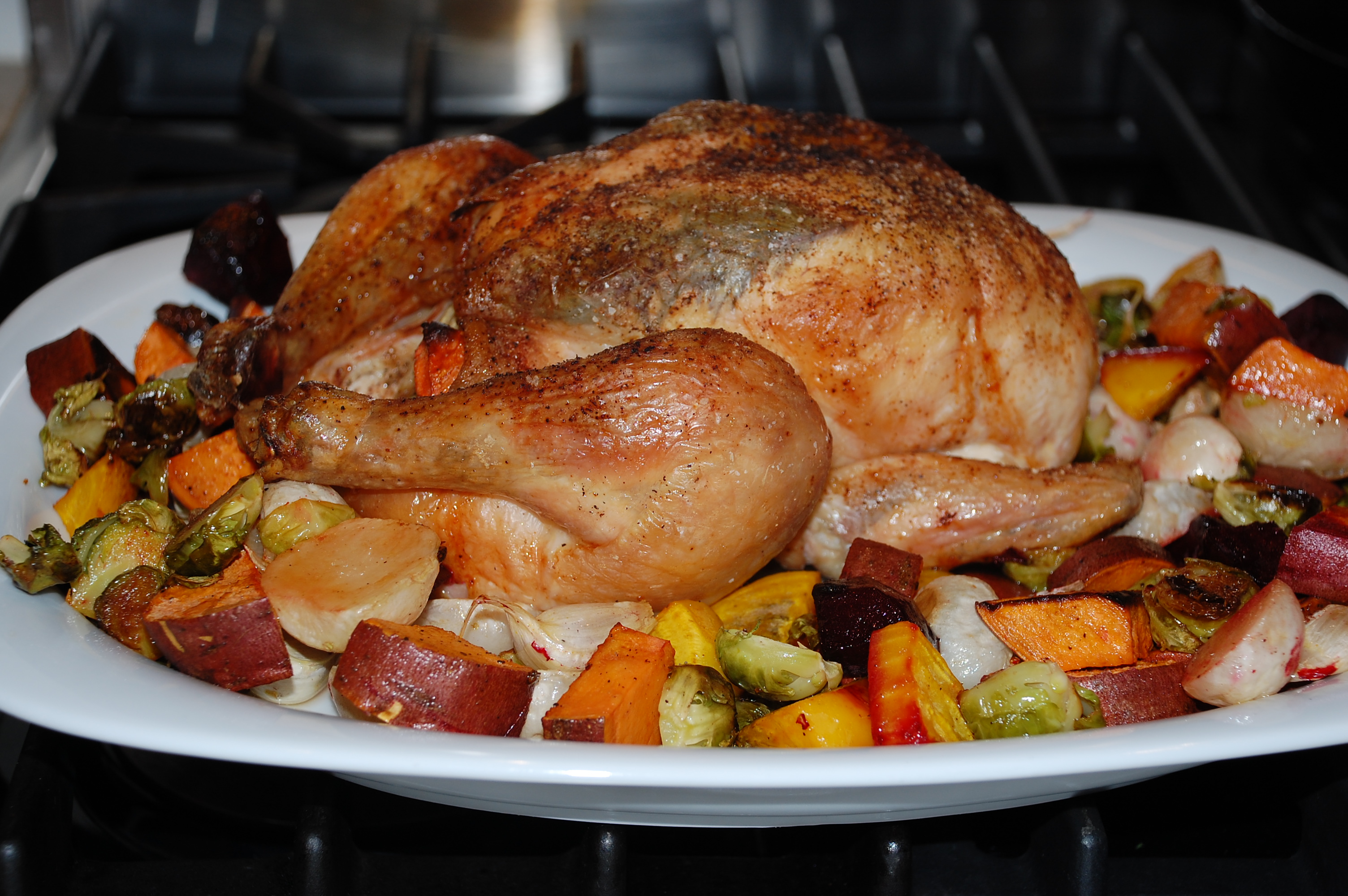
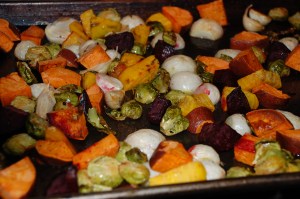
Serve with a side dish of your choice. In our house, Flickin’ Chicken comes with a variety of sides, including mashed potatoes, roasted root vegetables, baked sweet potato fries, rice, quinoa, salad, Brussels sprouts, etc.